Physics
Nothing is too wonderful to be true, if it be consistent with the laws of nature.
— (1849)

A five-dimensional classical model tries to rebuild quantum behaviour without quantizing gravity
A Scientific Reports paper proposes a 4D + tau framework in which ordinary spacetime evolves under an extra parameter. In simulations and model calculations, it recovers Newtonian gravity in equilibrium, aims toward basic general-relativistic structure, and reproduces EPR-type correlations and double-slit-like interference through worldline dynamics. The result is a provocative theoretical construction, not experimental proof that quantum gravity is solved or that standard quantum mechanics is wrong.

In orbit, table salt grew hollow cubes. Gravity changed the brine, not the salt
Sodium chloride crystals grown on the International Space Station included hollow, stepped cubes 2 to 8 millimetres across. The papers support a transport explanation: ordinary settling and buoyancy-driven flow were strongly suppressed, while diffusion dominated early growth. The lattice did not become a new form of salt, and the experiments do not establish an industrial process.
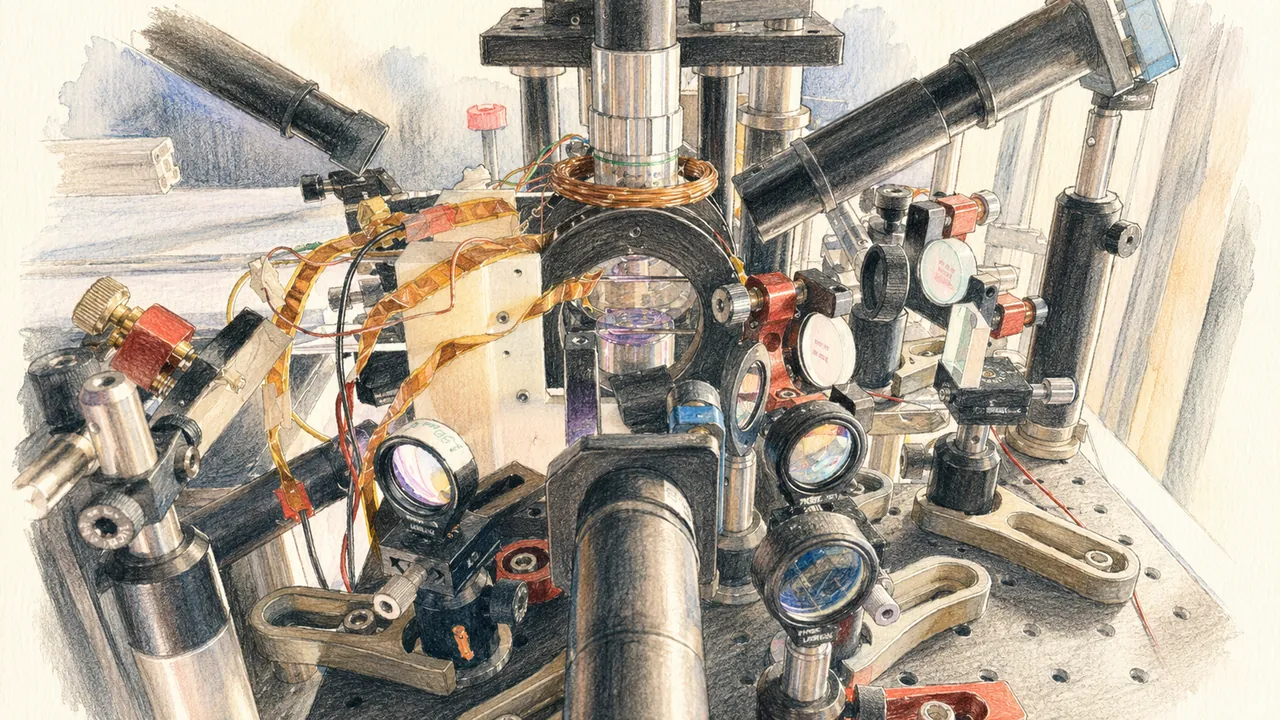
A cold-atom experiment tests quantum gravity's 'problem of time' - as a laboratory analog, not an answer
In canonical quantum gravity, the Wheeler-DeWitt equation has no external clock to sequence events: the 'problem of time'. A single-author experiment isolates a Bose-Einstein condensate, splits it with a thin optical barrier into an unobserved and an observed sector, and builds an internal clock from the entropy that flows between them. That 'entropic time' orders the observed sector's expansion and recollapse, and an effective equation reproduces the measured data in the low-barrier case examined. It is a controlled testbed for relational-time ideas: the 'big bang', 'big crunch' and 'miniuniverse' are analog labels for a trapped gas, not real cosmology, and the work does not claim to solve the problem of time or quantum gravity.

Black holes obey thermodynamic 'laws' — a new result extends them to black holes violently out of equilibrium
Since the 1970s, black holes have been known to obey laws that mirror thermodynamics, but the cleanest version only applied to black holes sitting quietly in equilibrium. A new Physical Review Letters paper extends the first and second laws to portions of quasi-local horizons that qualify as dynamical horizon segments and can be arbitrarily far from equilibrium — during accretion, collapse and most stages of a black-hole merger. Simulations track the quasi-local horizon throughout the merger, but the laws do not yet cover the brief interval around coalescence when it is not a dynamical horizon segment. The core framework is in general relativity, with a semiclassical application to evaporation; it is not new quantum gravity, an observation or a resolution of the black-hole information puzzle.
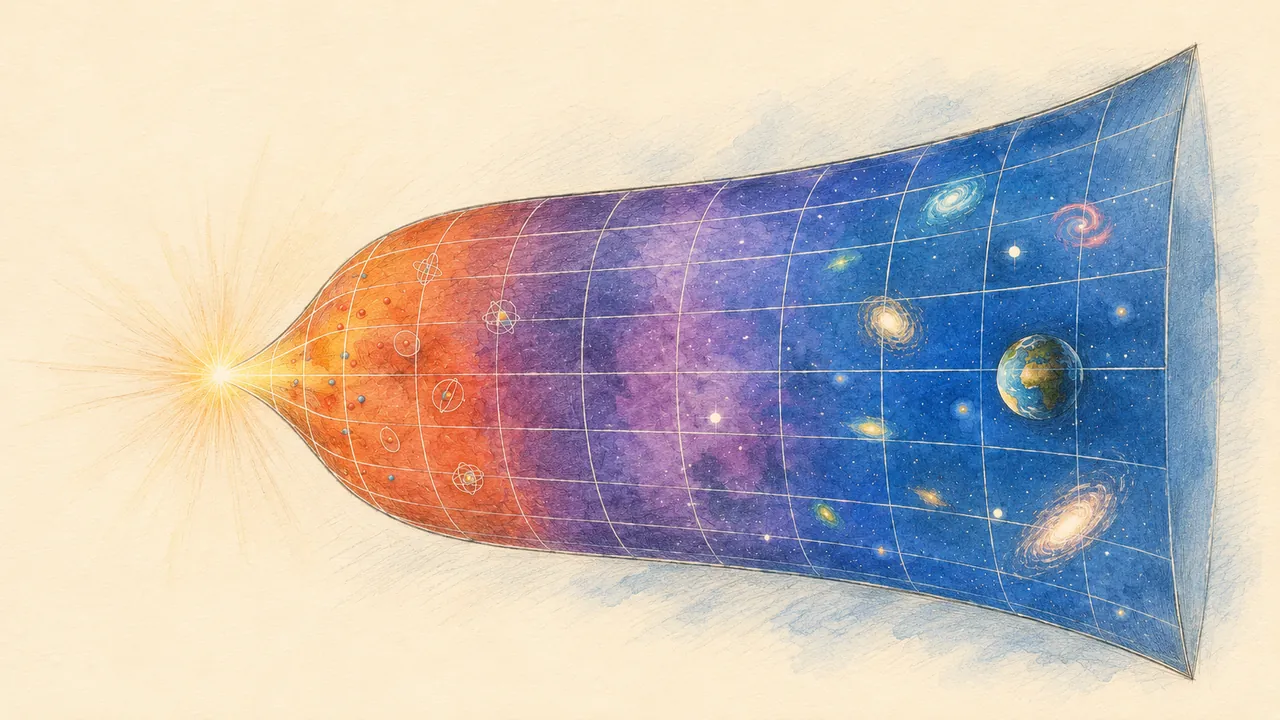
Inside an entropy-based gravity model, local entropy density falls while the total grows
A Physical Review D paper derives temperatures, pressures and a first law inside Gravity From Entropy, a proposed modified-gravity framework. In a late-time, low-curvature Friedmann approximation, the model's local entropy and energy densities fall while expansion makes total entropy rise. The calculation is internally concrete, but conditional: Friedmann cosmologies are not exact solutions of the full theory, and this is not observational evidence that gravity comes from entropy, an explanation of measured dark energy or a completed quantum-gravity theory.
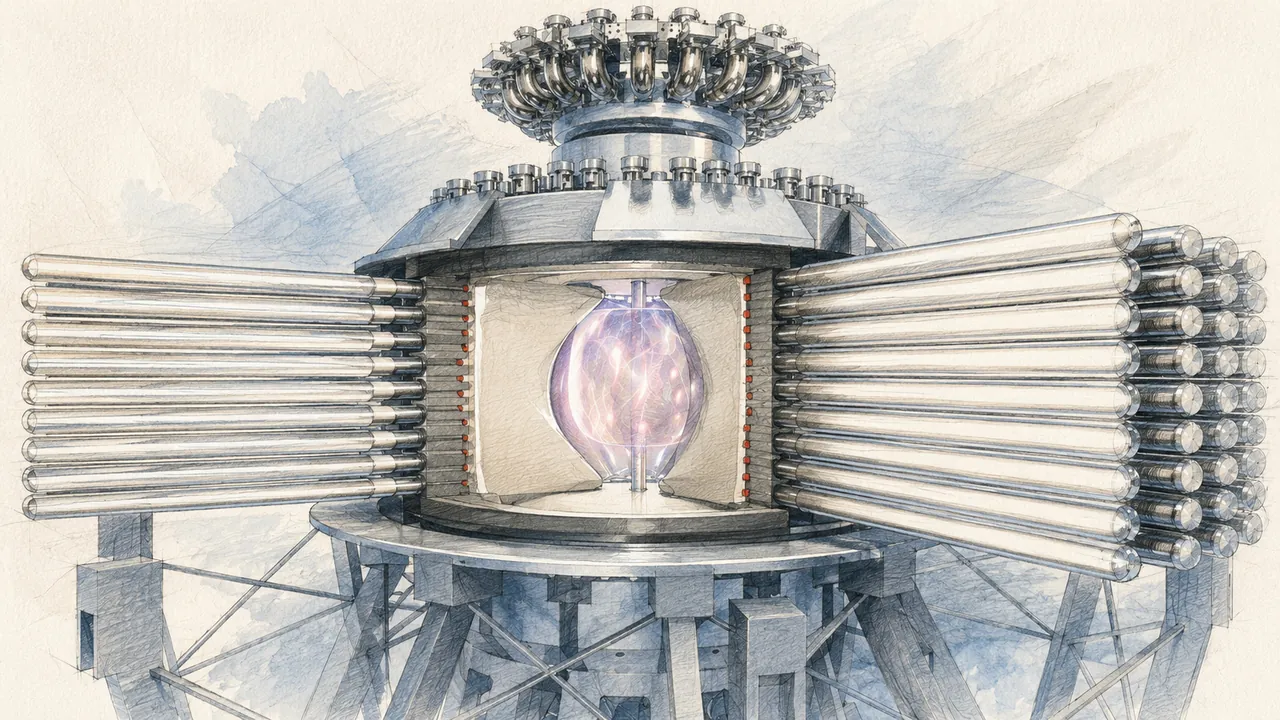
A fusion machine heated its plasma by squeezing it — the real step, and the power plant it is not
General Fusion's LM26 compressed a magnetized deuterium plasma with an imploding lithium liner and watched it heat up — more than tripling its electron temperature to a measured peak of about 0.72 keV (718 ± 80 eV, roughly 8 million °C), with most of the heating attributed to the compression itself, the mechanism its magnetized-target-fusion approach depends on. It is a real engineering checkpoint for that route to fusion. It is also the first 11 shots on one machine, described in a company preprint that has not been peer-reviewed, at a temperature still about ten times below what a burning plasma needs — with no net energy, no breakeven, and no electricity. A mechanism shown, not a power plant built.
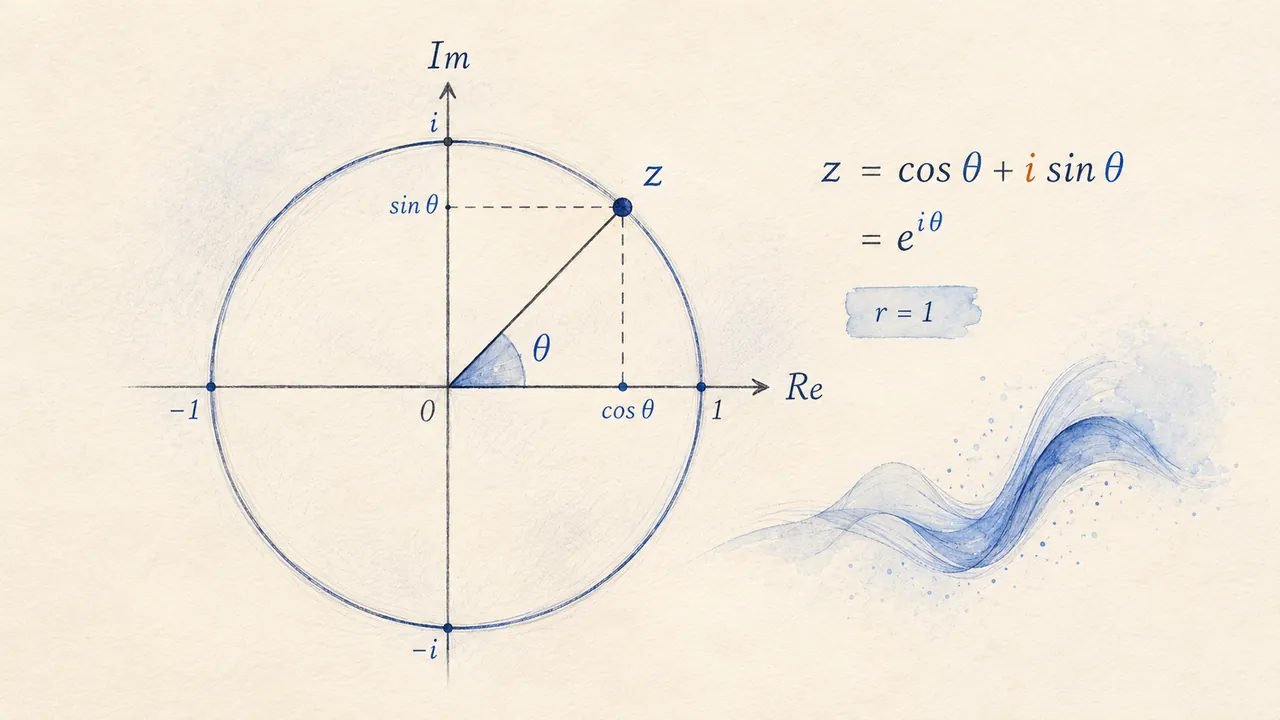
Quantum mechanics can be written with real numbers alone — the catch is in how you combine systems
In 2021 a widely reported result argued that a real-number version of quantum mechanics could be experimentally falsified, and follow-up experiments in 2022 agreed with standard complex quantum theory. That was often headlined as proof that imaginary numbers are physically real. A new paper in Physical Review Letters sharpens the claim: build the real-number formulation on a different, arguably more physical assumption about how separate systems combine, and it reproduces every prediction of complex quantum mechanics, including the multipartite tests. The honest reading is that complex numbers are convenient rather than strictly necessary — and that the earlier experiments ruled out one particular real theory, not real numbers in principle. It is a foundations result on paper, not a new measurement, and it does not ask anyone to stop using complex numbers.

A quantum memory finally got better as it grew — the real milestone, and the machine it is not
Google Quantum AI showed, cleanly for the first time, that a surface-code quantum memory can run below threshold: as they grew the code from distance 3 to 5 to 7, the logical error rate fell exponentially (about 2.14x per two steps), and the largest, a 101-qubit distance-7 memory, outlived its best physical qubit — beyond breakeven — with error correction running in real time. It is a long-sought engineering milestone. It is also a single logical qubit acting as a memory, at an error rate still far from what real algorithms need, with no logical operations performed, an unexplained error floor the authors flag, and orders of magnitude of scaling ahead. A threshold crossed, not a computer delivered.
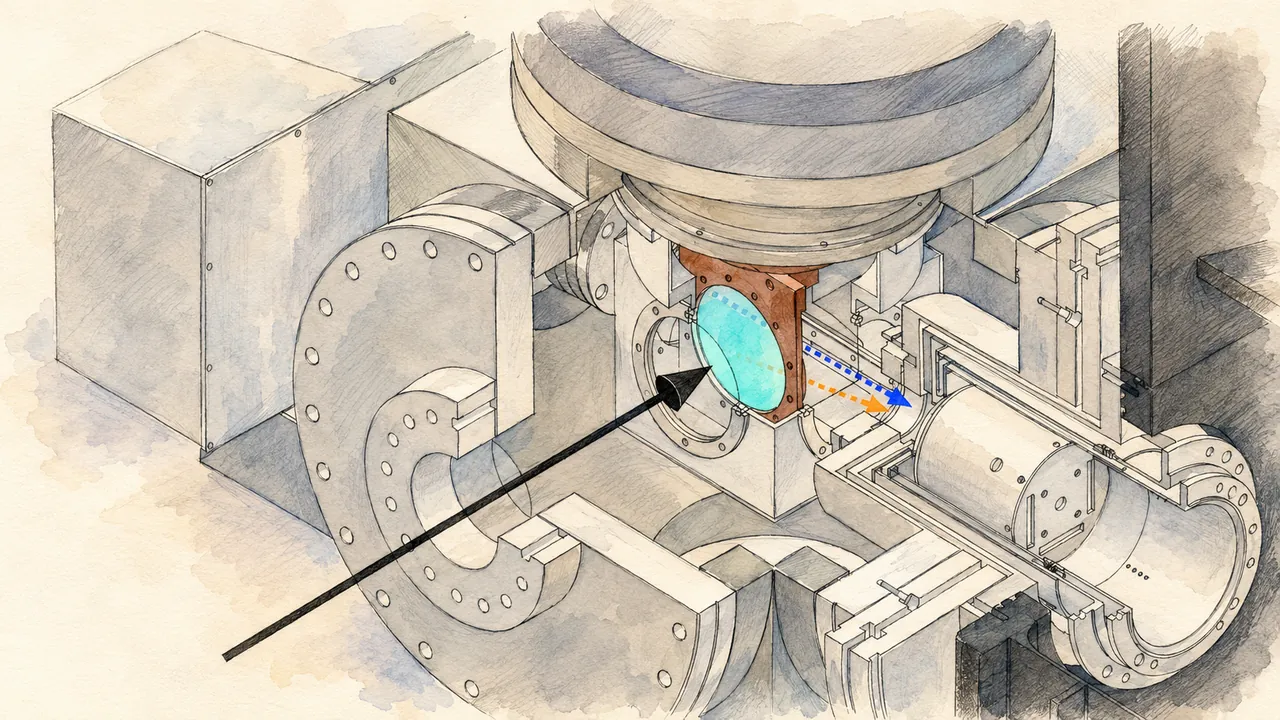
Muon-catalysed fusion: a hidden reaction step, seen directly at last — not a step toward fusion energy
Using an exceptionally sharp quantum-sensor X-ray detector, physicists fired muons into frozen deuterium and, for the first time, directly observed muonic molecules in fleeting “resonance” states — revealing that about half the muons take a pathway left out of the standard description of muon-catalysed fusion. It confirms a long-proposed formation mechanism and forces a revision of the field's models. It is a real advance in seeing and understanding the reaction — not a step toward fusion as an energy source: it does not improve efficiency, does not touch the muon-loss (“alpha sticking”) bottleneck, and was done in deuterium, not the energy-relevant deuterium–tritium mix.