Computer Science
Premature optimization is the root of all evil.
— (1974)
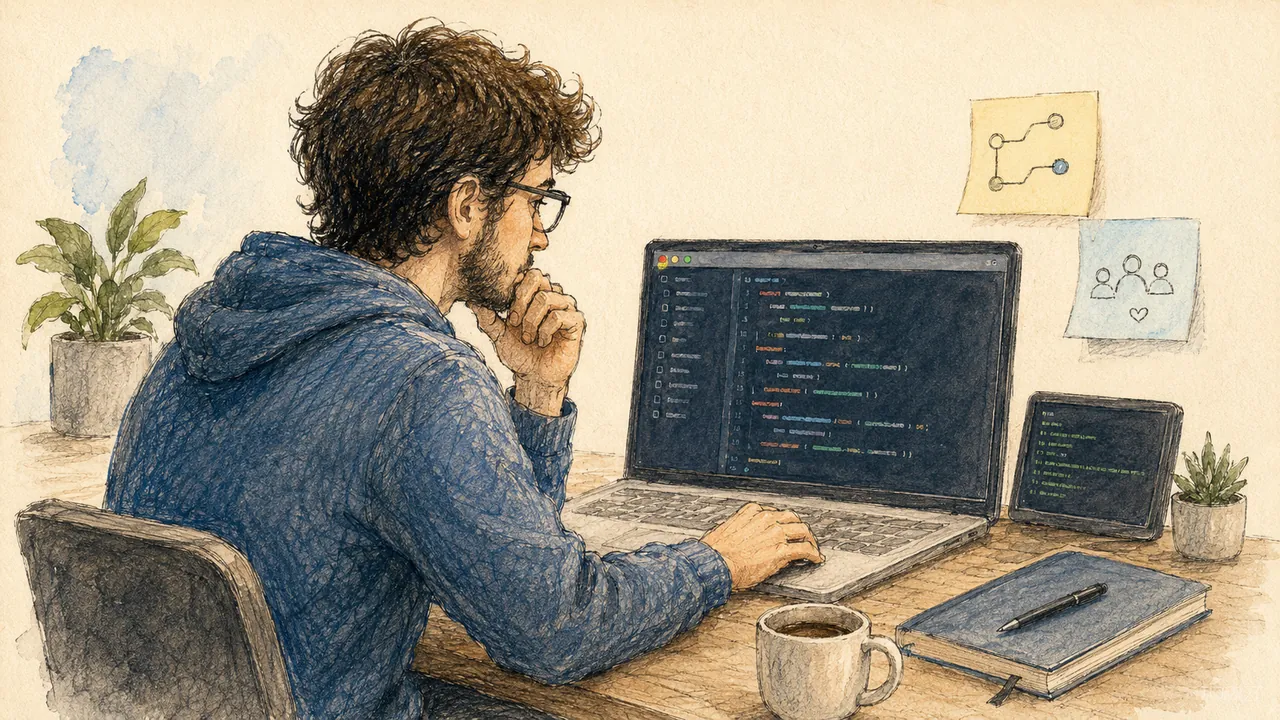
Experienced developers felt faster with AI while working measurably slower — the real finding, and the verdict on AI coding it is not
A randomized controlled trial by METR had sixteen experienced open-source developers do 246 real tasks on codebases they knew well, with early-2025 AI tools (Cursor Pro plus Claude 3.5/3.7 Sonnet) allowed on a random half. They expected AI to cut task time by about 24%; instead it raised completion time by 19% — and afterwards they still believed it had sped them up by about 20%. That perception gap is the sharp, robust core of the study. But it is sixteen developers, one narrow setting, and a fixed early-2025 snapshot: the authors are explicit it does not show AI fails to help most developers, and their own 2026 follow-up already leans toward a speedup, with caveats of its own.

A cryptographic proof can hide its secret by making the missing simulator hard to prove
Zero-knowledge proofs let someone prove a statement without revealing the witness. Classical theory says you cannot have that, in the full sense, with one message, no trusted setup and perfect soundness. Rahul Ilango's paper does not make that impossibility vanish. It changes the target: instead of requiring that a simulator really exists, it asks that no chosen proof system can efficiently prove that the simulator does not exist. Under major proof-complexity and cryptographic assumptions, that is enough to recover falsifiable, game-based consequences of zero-knowledge property by property. The point is not a plug-in internet primitive. It is a proof-theoretic way to turn mathematical unprovability into cryptographic cover.
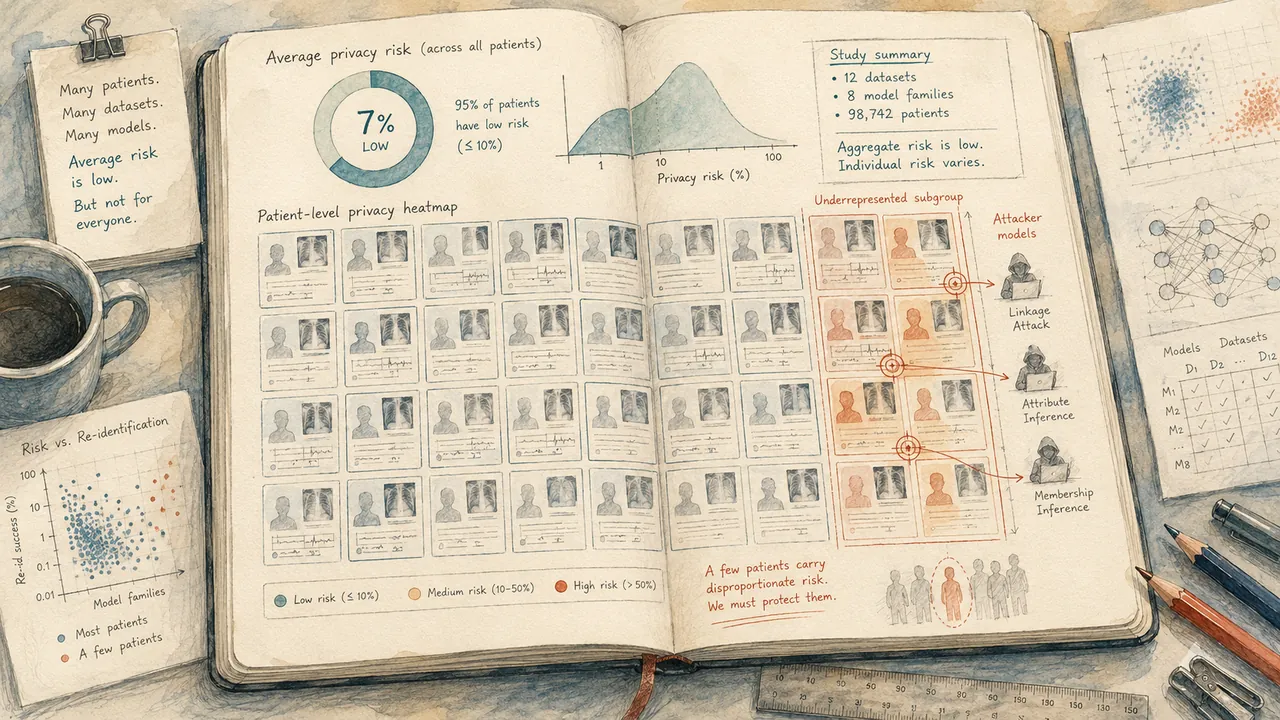
A medical AI can be private on average and still expose particular patients — the underrepresented most of all
A medical-AI model called 'privacy-preserving' usually rests on one average number. This study argues that number is the wrong test. Studying membership inference attacks — which reveal whether a specific person's record was in a model's training data, and so can betray that they had a given disease — the authors measured risk per patient rather than in aggregate, across seven medical datasets (imaging, ECG, electronic records) and many models each. The pattern: models that look safe on average can still let an attacker identify specific individuals almost perfectly (attack AUC ≥ 0.95); the exposed are systematically those from underrepresented groups (minority ethnicity, rare disease, unusual imaging); and it gets worse as models grow. The authors do not say abandon medical AI — they say measure privacy per patient, control model access, and use differential privacy. The uncomfortable core: 'private on average' is not a privacy guarantee, and it fails the patients already least protected.
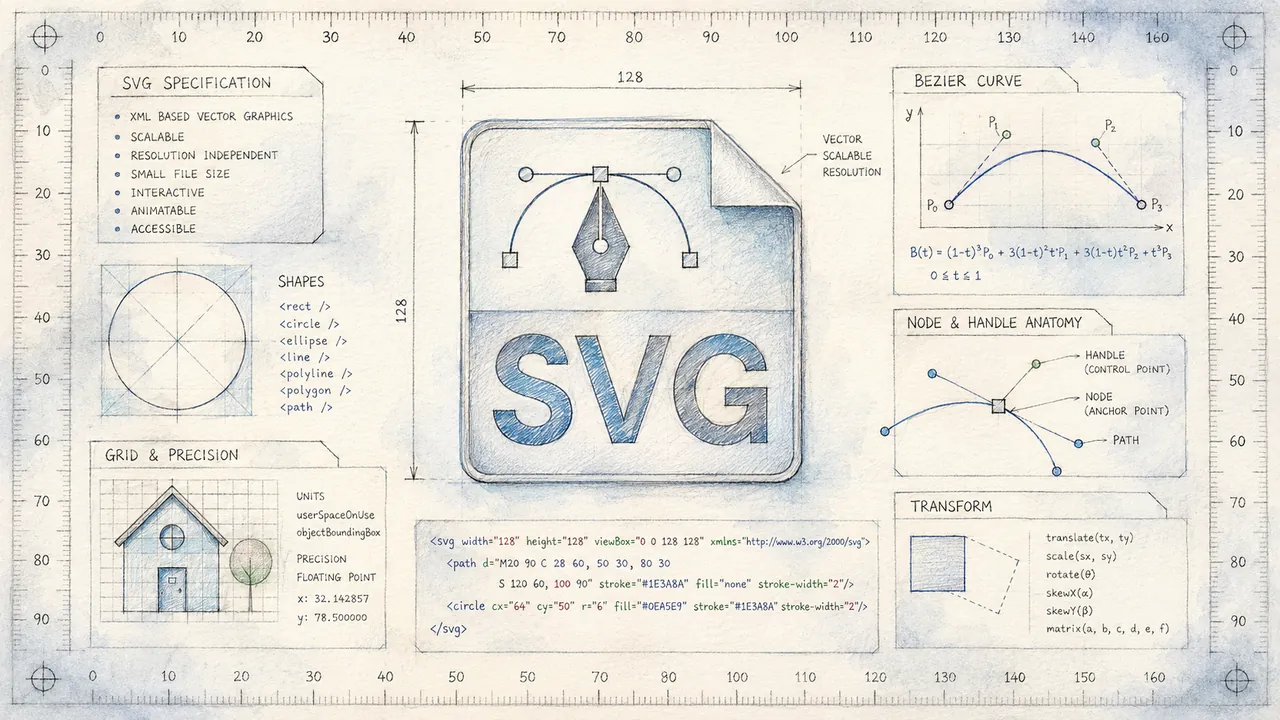
Teaching a drawing AI to look at the page
Language models that generate vector graphics do it blind — writing out the drawing commands without ever seeing the result. A new method lets the model watch its own canvas fill in, stroke by stroke, and the honest twist is that simply giving it eyes makes things worse: it has to be retrained to use them. The payoff is a model that matches or edges out rivals trained on up to twenty times more data — a real, careful result on one benchmark, not a revolution.
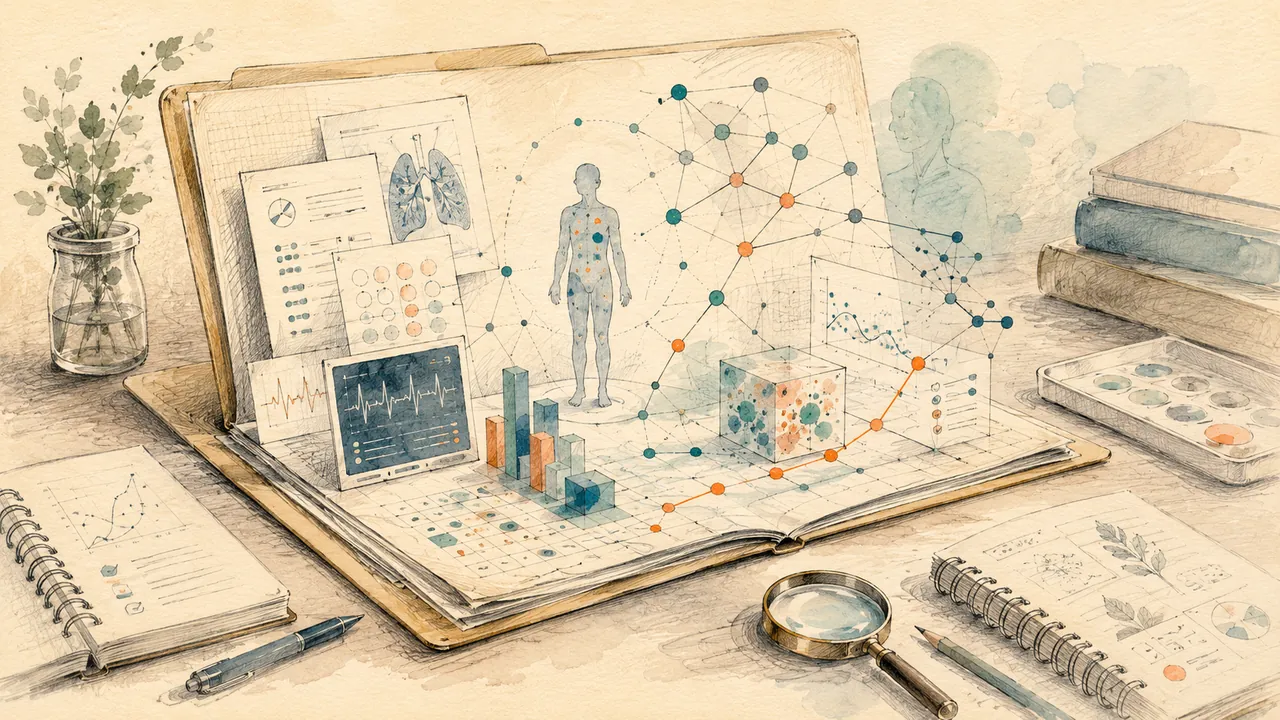
An AI agent worked entire patient cases on its own — in a simulator, on past records
MIRA is a new kind of medical AI: instead of answering a single question, it works an entire case inside a simulated hospital record — taking a history, ordering and reading tests, reaching a diagnosis, writing the orders. On 574 retrospective cases from a public database, across eight pre-selected diagnoses, the authors report it outperformed physicians on diagnostic accuracy and made largely guideline-concordant, medication-safe decisions. Every qualifier in that sentence carries weight: it ran in a sandbox on past records, in text only; much of its edge came on the conditions with clear-cut test results; it ordered about twice as many blood tests as the doctors; and several outcomes were scored against what the original chart recorded. The genuine advance is an agent that acts across the whole workflow — not proof that a machine now diagnoses better than a doctor. The authors say so: generalization, safety and governance still need prospective, real-world studies.
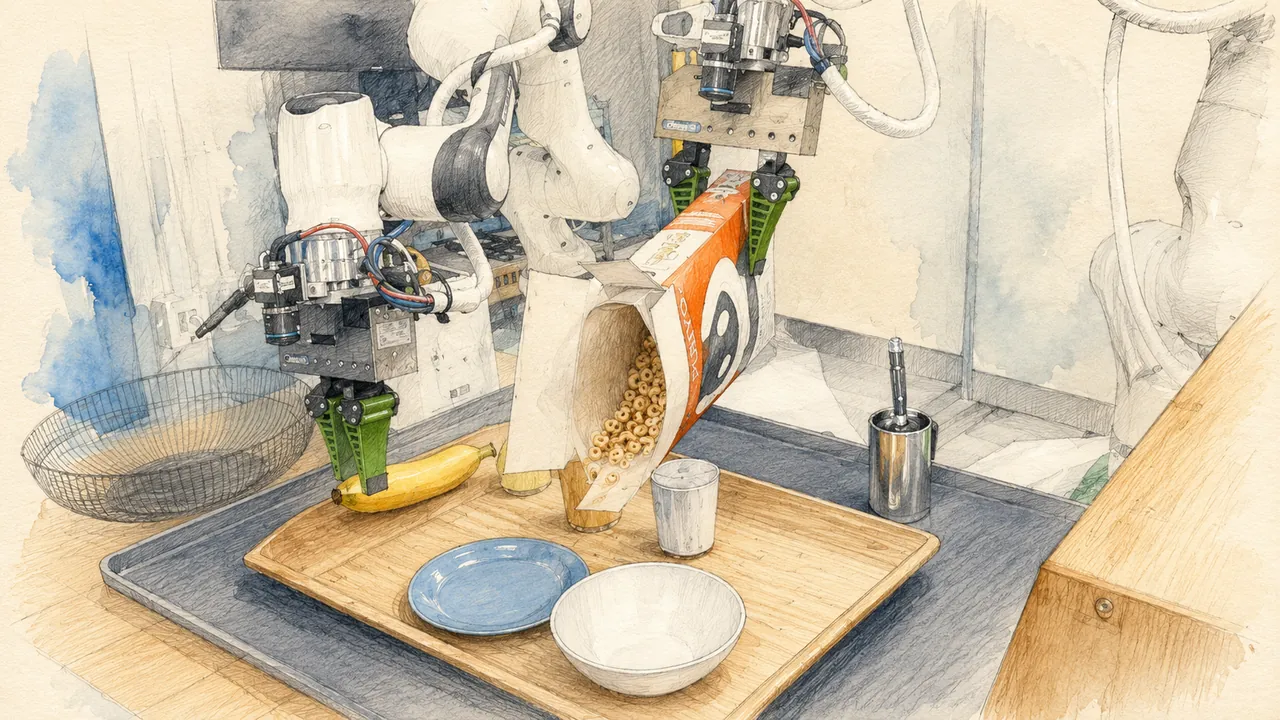
Do big robot “foundation models” actually work better? A careful answer — modestly yes, and most studies can't tell
Toyota Research Institute trained “large behavior models” — robot policies pretrained on ~1,700 hours of diverse manipulation data — and tested them against from-scratch single-task policies with unusual rigour: blind, randomized, large-sample trials (~1,800 real-world, 47,000+ simulation) with real statistics. After per-task finetuning the big models did better on average, needed roughly 3–5× less task-specific data, and were more robust when conditions shifted; performance rose smoothly with more pretraining data. But used without finetuning they did not consistently beat single-task models, several effects were small enough to need the large samples to see at all, and a mundane data-normalisation choice mattered more than architecture. It is measured support for the robot-foundation-model direction — not a general-purpose robot, not a zero-shot generalist, not an “emergent leap” — plus a pointed warning that much of robotics may be measuring noise.
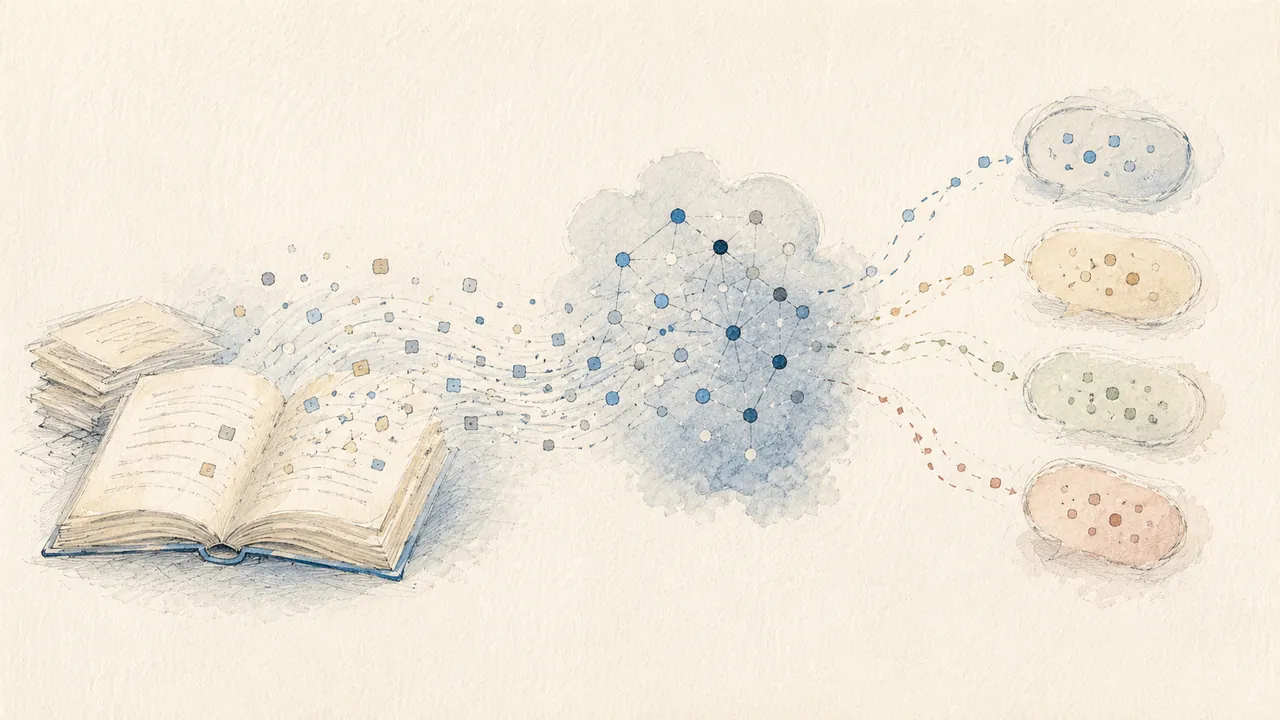
Why language models hallucinate — and why the way we grade them keeps it that way
The confident falsehoods we call “hallucinations” are not a mysterious glitch: some are a statistical by-product of training, and they persist because mainstream benchmarks reward a confident guess over an honest “I don't know.” A case study on four frontier models shows that stating the scoring rules in the prompt (“open rubrics”) reverses that incentive.