Chemistry
Conquering matter is to understand it, and understanding matter is necessary to understanding the universe and ourselves.
— (1975)
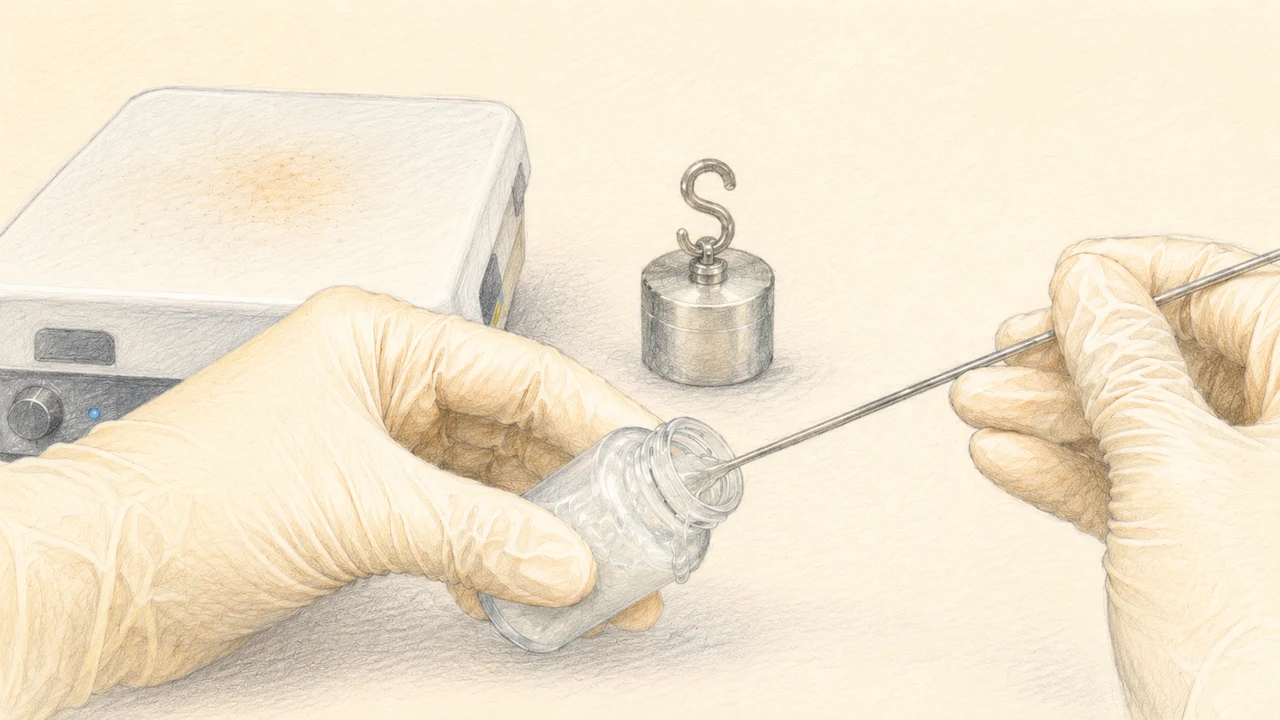
A small molecule glued untreated PTFE, then washed off with ethanol
A JACS paper reports fluoro-crown ether phosphate adhesives that bond notoriously inert PTFE in lab lap-shear tests while remaining removable by ethanol washing. CyclicFP-fmoc reached 1.3 MPa on untreated PTFE with ductile cohesive failure, and a related variant reached 2.3 MPa. The mechanism is supported by spectroscopic evidence for fluorine-fluorine interactions at PTFE plus hydrogen bonding and pi-stacking inside the adhesive. It is a promising materials result, not yet a commercial glue, a universal recycling fix or a full environmental-safety assessment.
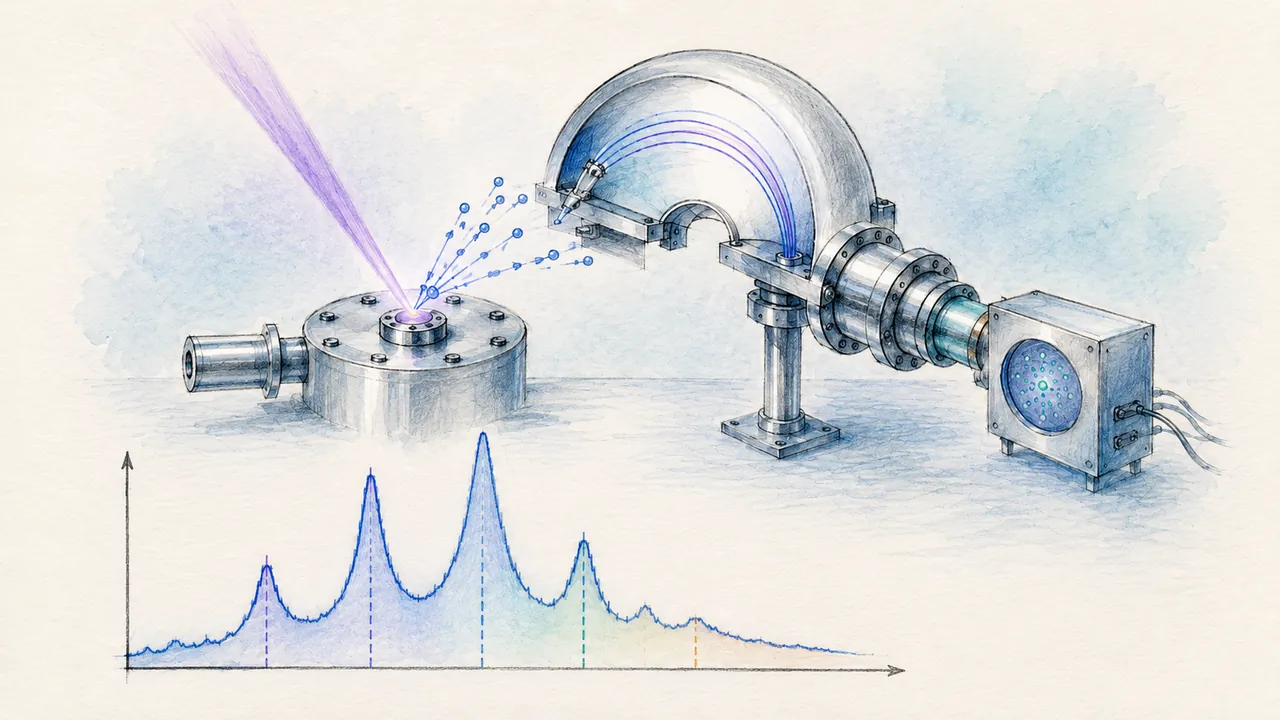
A carbon-bismuth triple bond shows where the textbook sigma-and-pi picture stops working
A Science study probes the CBi- molecular ion, a heavy-element cousin of familiar triply bonded species, with cryogenic photoelectron spectroscopy and relativistic quantum calculations. The result is direct evidence that strong spin-orbit coupling can reorganize the classical sigma and pi bonding framework into relativistic Kramers pairs labeled by total angular momentum. This does not make ordinary chemical bonding wrong; it shows why the bookkeeping changes near very heavy atoms.
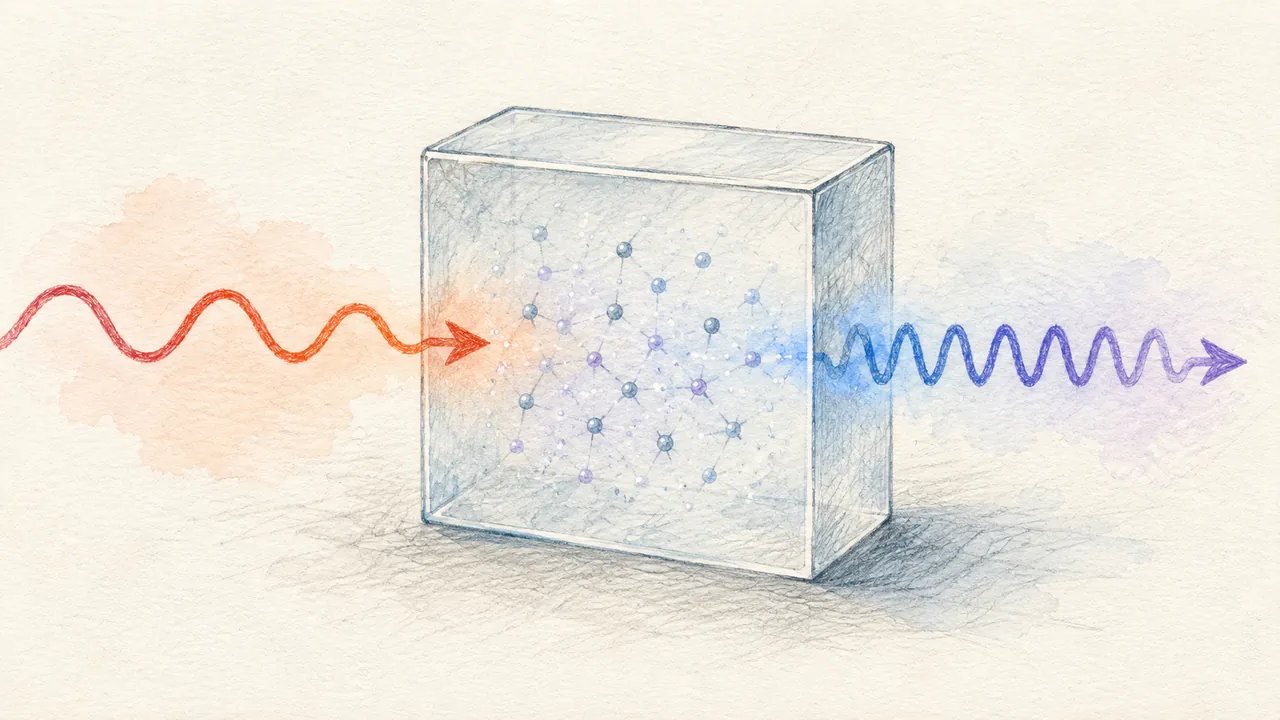
A solid material turns visible blue light into UV at sunlight-level intensity — but it is not a solar-energy machine
Researchers engineered DHI-based organic crystals whose alkyl side chains protect the π-electron system without stopping triplet energy from moving. The best iBu-DHI/Ir(ppy)₃ solid film produced visible-to-UV triplet-annihilation upconversion with 1.9% absolute quantum yield and a 1.2 mW cm⁻² threshold near the solar intensity around 445 nm. That is a real materials advance for solid-state photon upconversion. It is not a working solar device, not 'free UV,' and not proof that visible sunlight can yet drive useful UV chemistry at scale.