Guides
Evergreen guides for reading scientific results more carefully: what each tool measures, what the numbers mean, and what they don't prove.
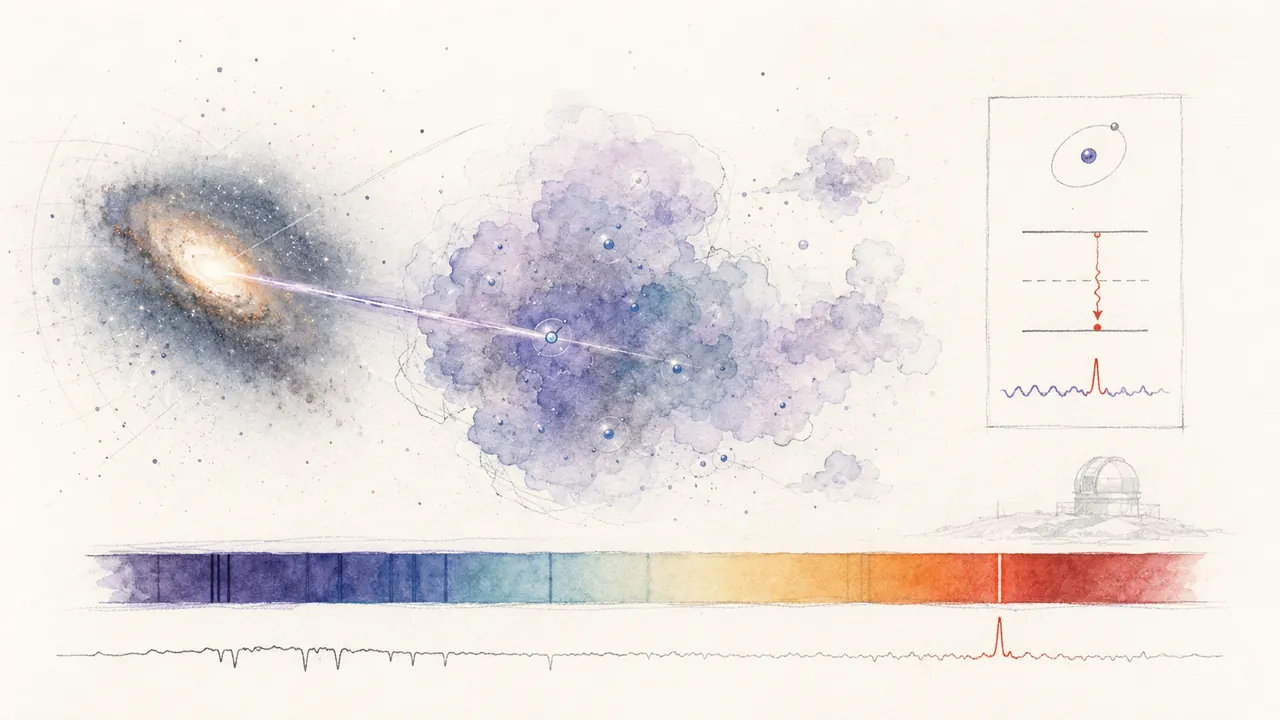
What Lyman-alpha tells astronomers
Hydrogen writes one far-ultraviolet line — 1216 ångström — into the sky two ways: as emission that lights up distant galaxies, and as the absorption 'forest' a quasar's light gathers on its way to us. Here is what each one tells astronomers.

How JWST works
The James Webb Space Telescope is not a bigger Hubble. It is a cold infrared observatory that gathers very faint light and turns it into spectra — reading planets, galaxies and atmospheres from the fingerprints in that light. Here is how.

How DESI works
DESI does not photograph dark energy. It measures the three-dimensional positions of millions of galaxies and reads the universe's expansion history out of the pattern they make. Here is how.
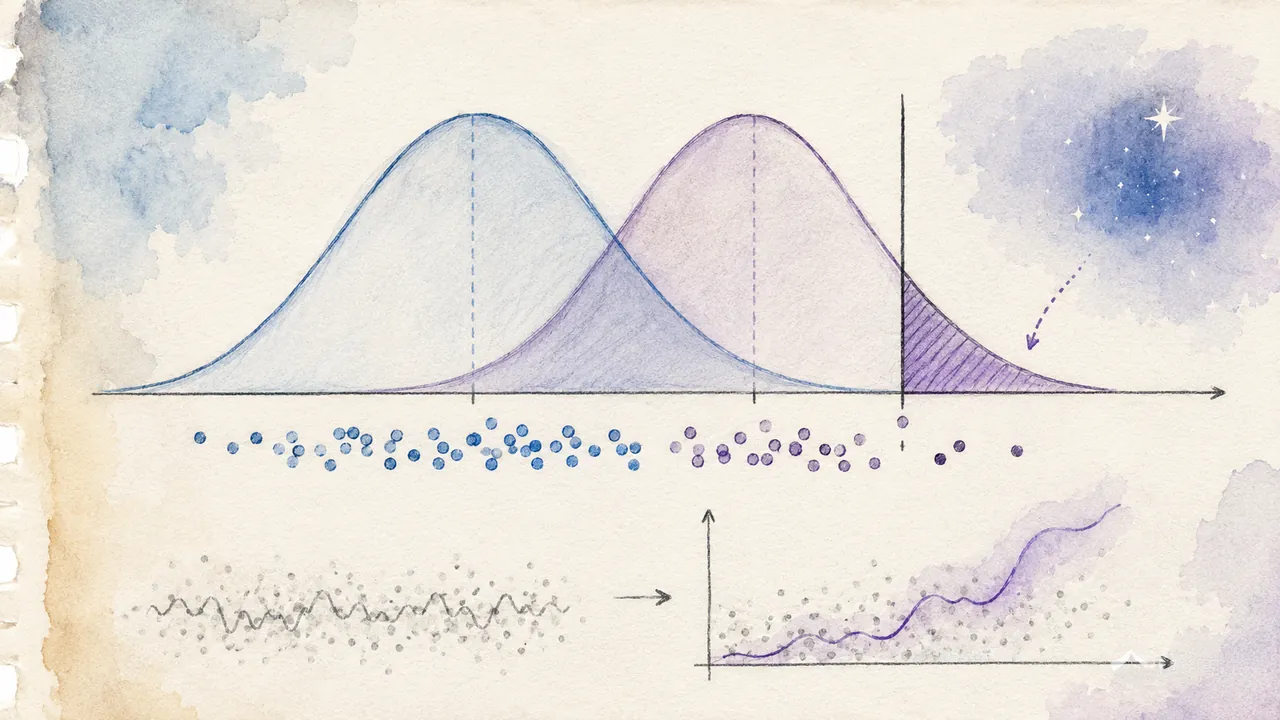
What statistical significance means
Sigma levels and confidence intervals can look like verdicts. They are not. They measure how strongly data support a statistical claim — and why that is only the first question.

How to read a clinical result
A line like “aOR 0.77, 95% CI 0.55–1.08, P = 0.13” looks like a wall. It isn’t. Here is how to take one apart, number by number — and, just as important, how to put it back together.