Astronomy
Your reward will be the widening of the horizon as you climb.
— (1984)
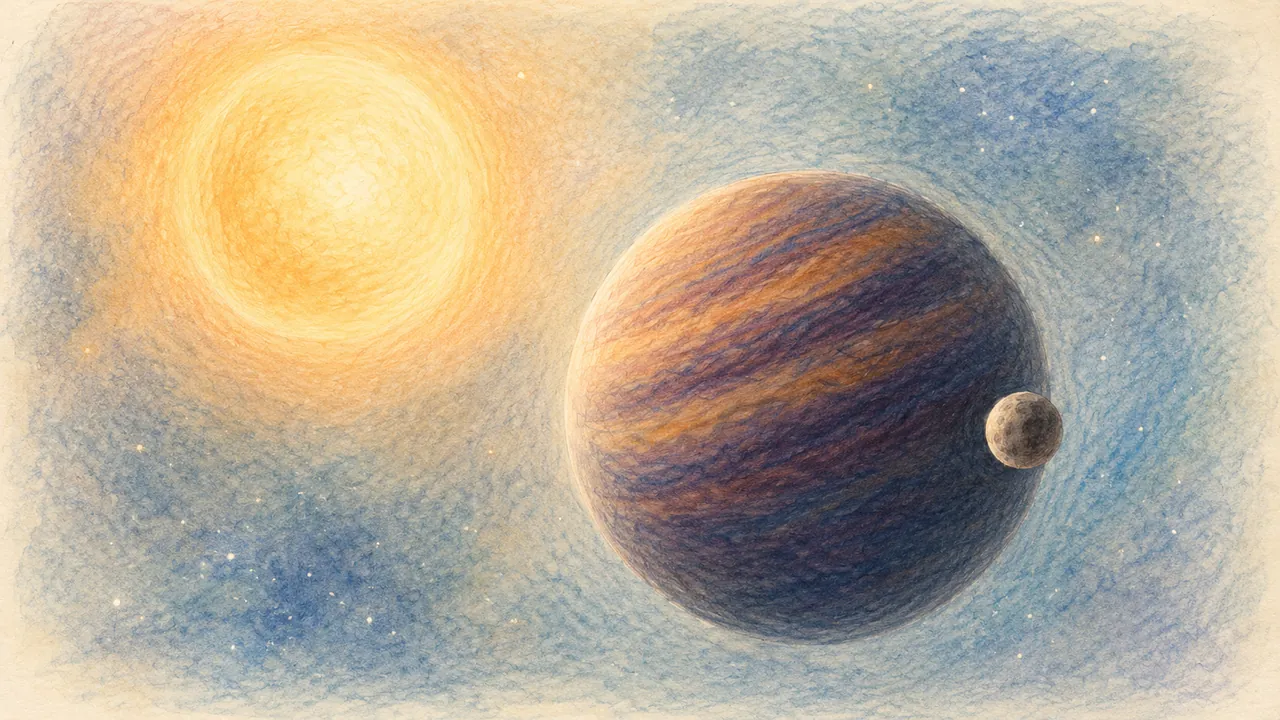
A brown dwarf appears to wobble every 171 days. One hidden world may be pulling it, but the data still permit two
Twenty-three high-quality spectra reveal a strong periodic shift in the motion of CD-35 2722 B. The preferred model is one eccentric companion with a minimum mass near Jupiter's, but a two-object model can mimic the same signal, slow brown-dwarf variability remains possible in principle and the word “exomoon” has no settled boundary here.
The first isotope reading of an interstellar comet hints it was born around an old, metal-poor star — with big error bars
Astronomers used the VLT to measure carbon and nitrogen isotope ratios in 3I/ATLAS, the third known interstellar comet — the first time this has been possible for an object from another star. Both ratios come out higher than in Solar System comets, which is compatible with 3I forming in the cold outer reaches of a disk around an older, low-metallicity star. The measurement is a genuine first, but it rests on one object, two ratios from a single molecule, and large uncertainties — not a discovery of where 3I came from, and nothing to do with life.
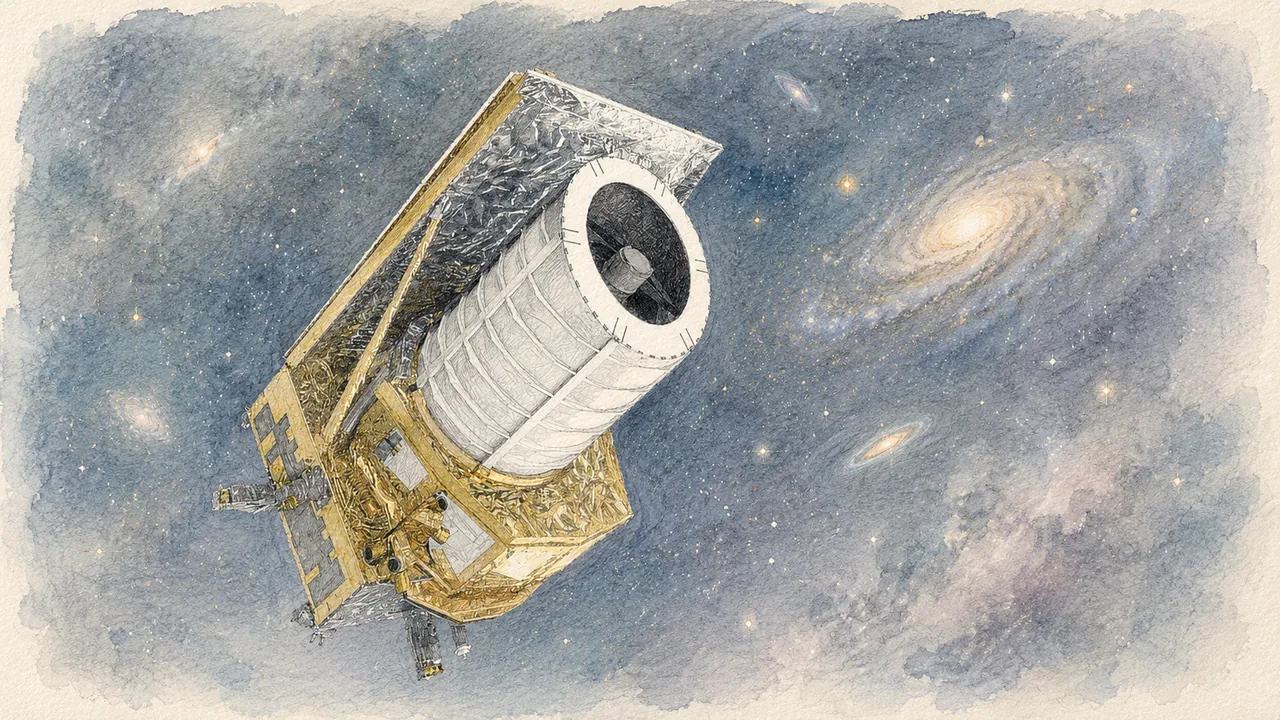
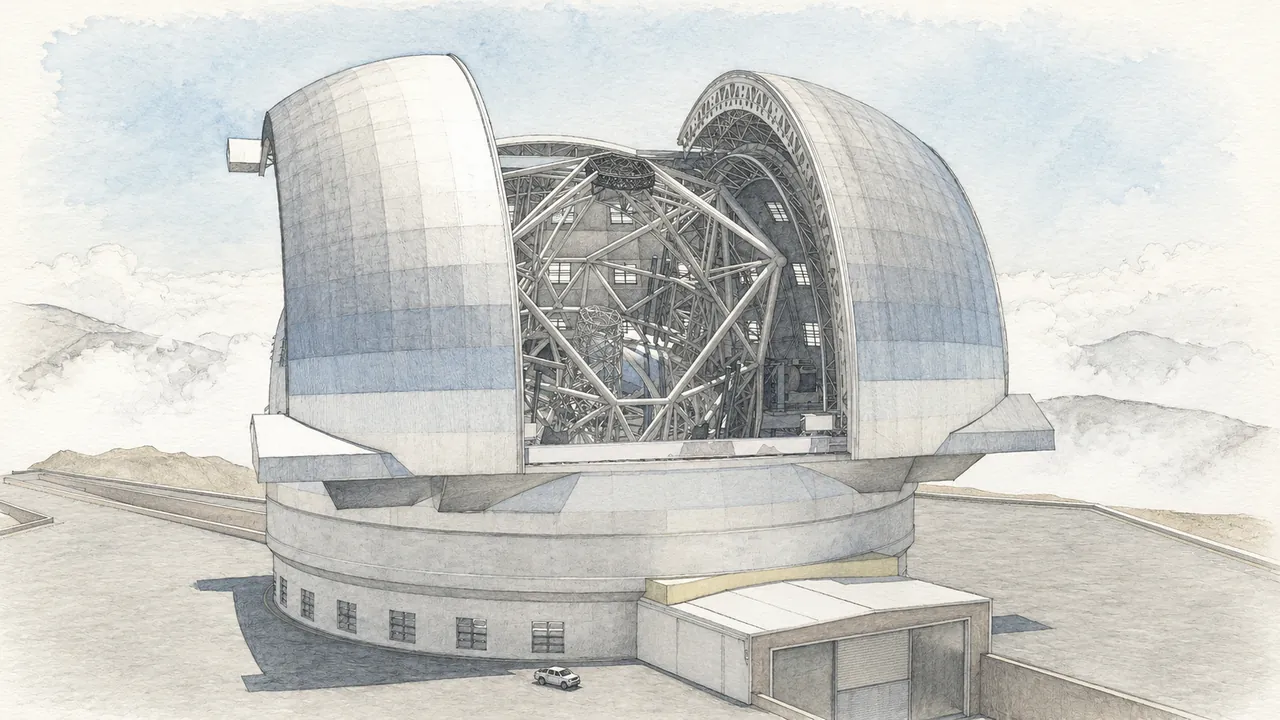
Euclid more than doubles the small sample of quasars from beyond redshift 7
In the first year and a half of the Euclid Wide Survey, a search over roughly 3000 square degrees turned up 31 new quasars between redshift 6.6 and 7.8. Twelve of them lie at redshift 7 or higher, more than doubling the handful known there before Euclid, and one at redshift 7.77 is now the most distant quasar on record. The real advance is not that single record, which only nudges a frontier that had sat near redshift 7.5 for years: it is the survey's power to find these rare, mostly faint objects in bulk, which is what makes them useful as probes of the young Universe. This is an initial result, with the full statistical analysis and much of the spectroscopic confirmation still to come.
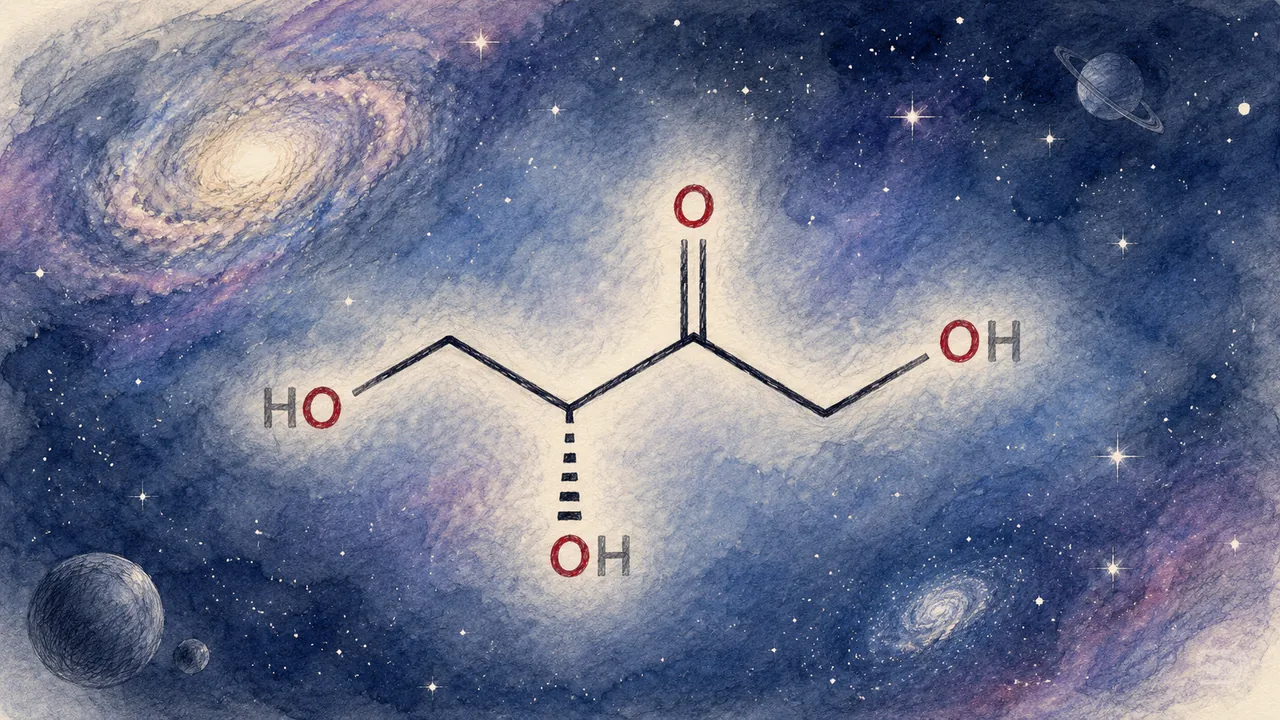
The first sugar found between the stars is chemistry, not life
Astronomers report the first detection of a true sugar molecule in the interstellar medium: erythrulose, a chiral four-carbon ketose, seen in radio spectra from the Galactic Centre cloud G+0.693−0.027. The detection is technically strong — multiple spectral lines, abundance fitting, and a plausible grain-ice formation route from smaller molecules. It matters because it moves one class of prebiotic chemistry off Earth and into space. But it is not ribose, not RNA, not life, and not proof that early Earth was seeded with enough sugar to start biology.
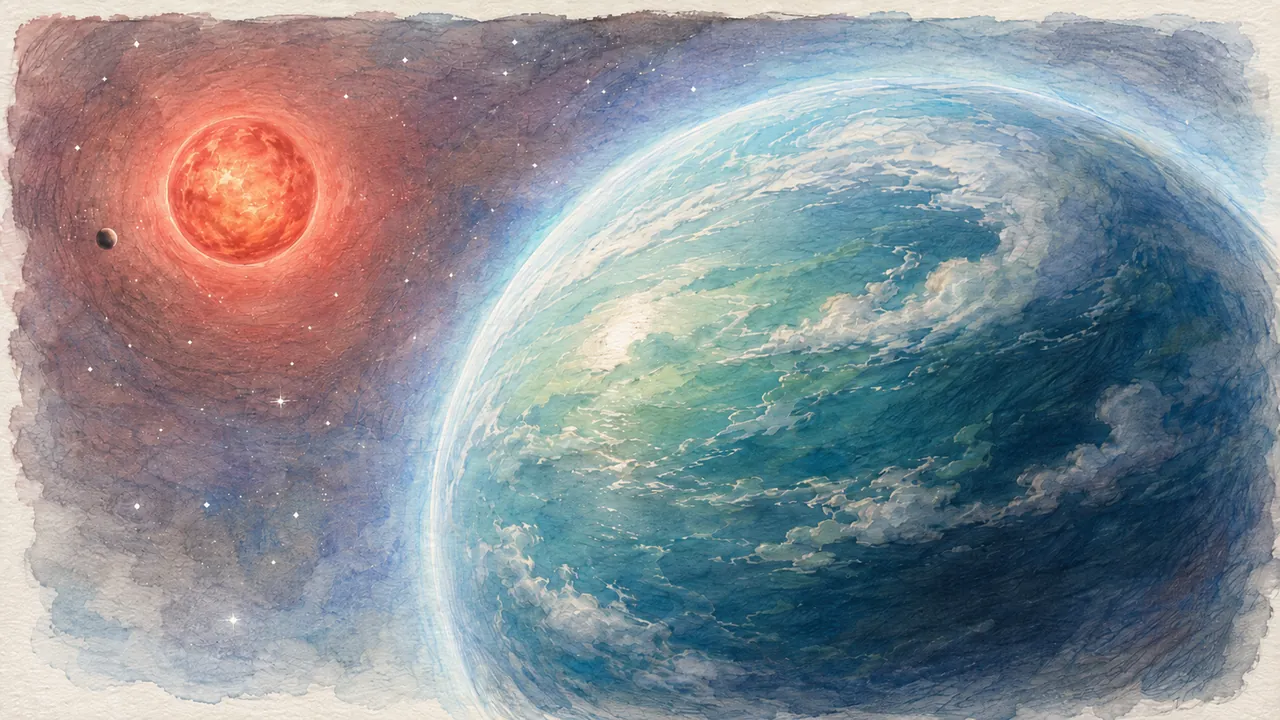
K2-18 b: the distance between a hint and a headline
In April 2025, JWST observations of the sub-Neptune K2-18 b were reported as the strongest signs of life yet found beyond the solar system. The paper itself was far more careful: a roughly 3σ hint — below the threshold for even a firm detection — that one of two similar sulfur molecules, possible biosignatures, is present, on a planet whose habitable-ocean nature is itself uncertain. The authors flag non-biological sources and call for more data; independent teams have since found the evidence weaker. A real measurement, not the discovery of life.
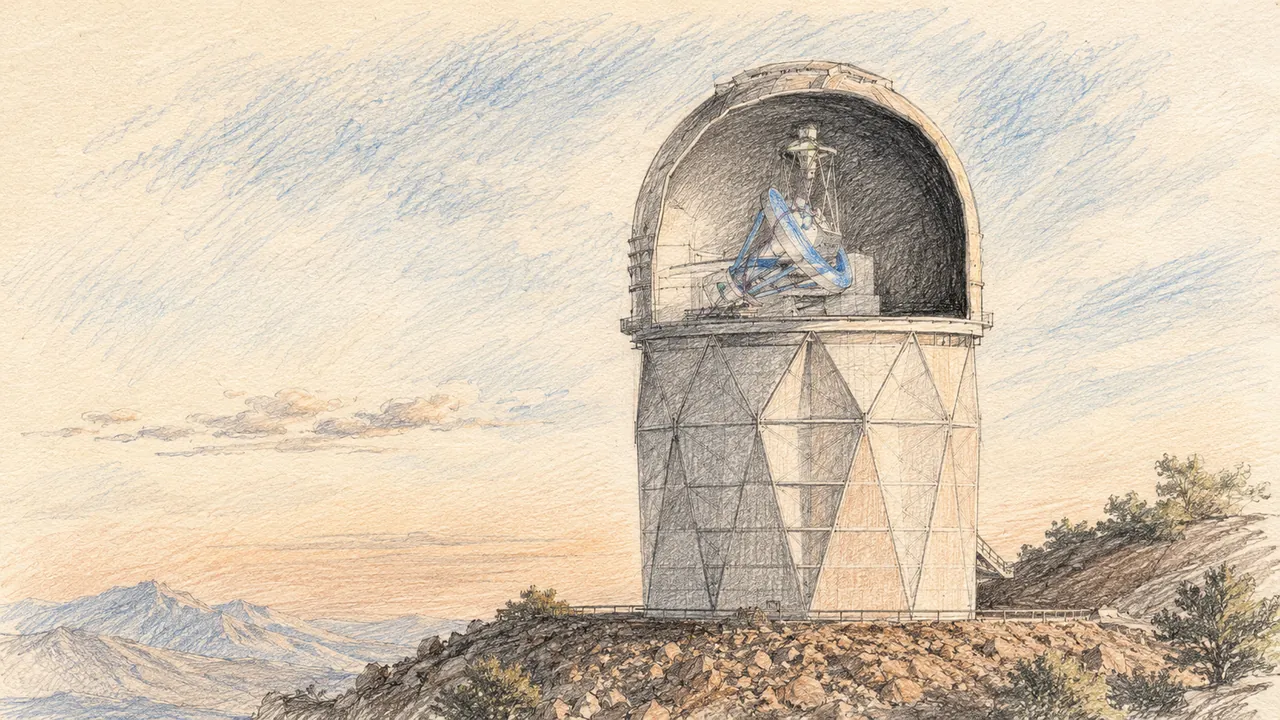
DESI's sharpest cosmic ruler, and a careful maybe about dark energy
DESI measured the universe's expansion history with the most precise baryon-acoustic ruler yet built, from six million objects. On its own, that ruler agrees with the standard model in which dark energy is a constant. Only when DESI is combined with the cosmic microwave background and a supernova sample does a preference for evolving dark energy appear — at 2.6σ to 3.9σ depending on which supernovae are added, below the threshold physicists require for a discovery and sensitive to the data it is paired with. A real question made precise, not an answer.
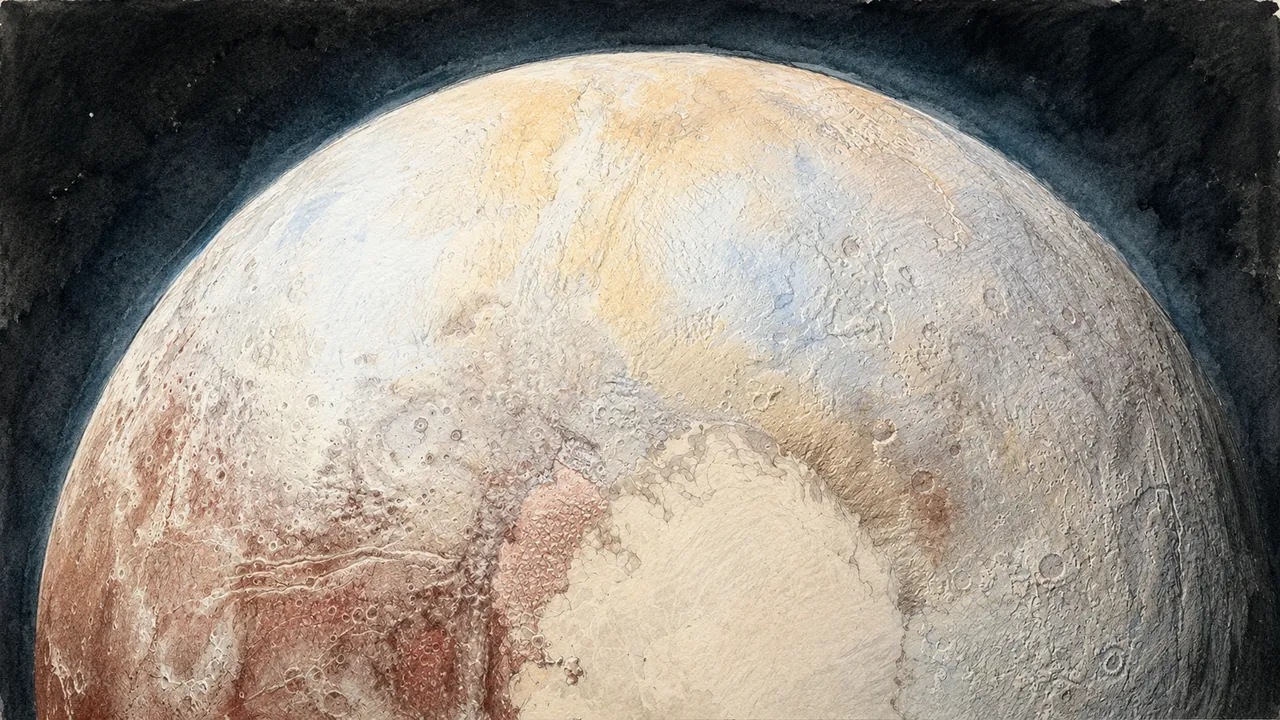
JWST saw the same unidentified fingerprint on Titan and Pluto
JWST spectra show a real absorption feature near 5.11 micrometers on the surfaces of Titan and Pluto. The signal appears in independent instruments, behaves like a surface feature rather than atmospheric haze, and does not match published laboratory spectra of the expected ices. That makes it an unsolved identification problem, not evidence for an exotic substance: the likely answer is an ordinary frozen organic compound whose laboratory fingerprint has not yet been measured under the right conditions.
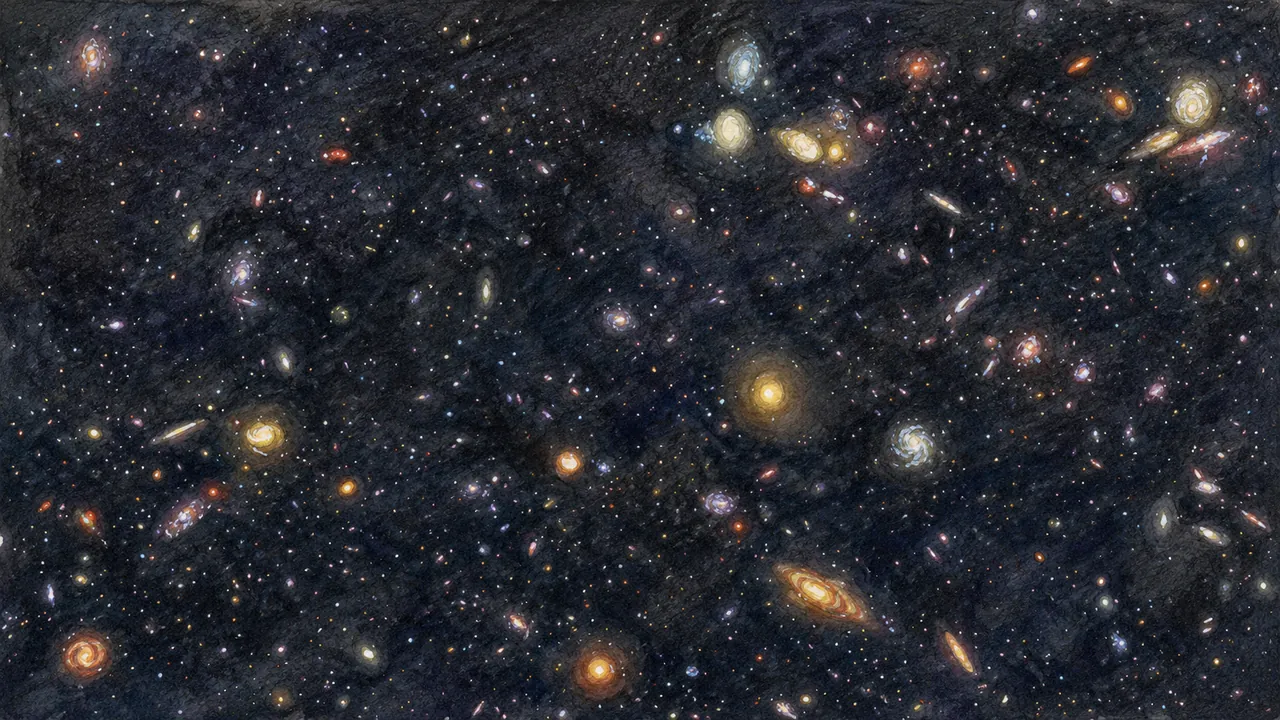
The furthest galaxy yet caught leaking its ionizing light
Astronomers used the JWST and Hubble to catch the escaping ionizing ultraviolet of a single galaxy about 250 million years after cosmic reionization — the most distant such 'leak' seen directly. The headline escape fraction of 50-100% is real but reconstructed through models, not measured; the quieter result is a first high-redshift test of how to spot the leak once it can no longer be seen.
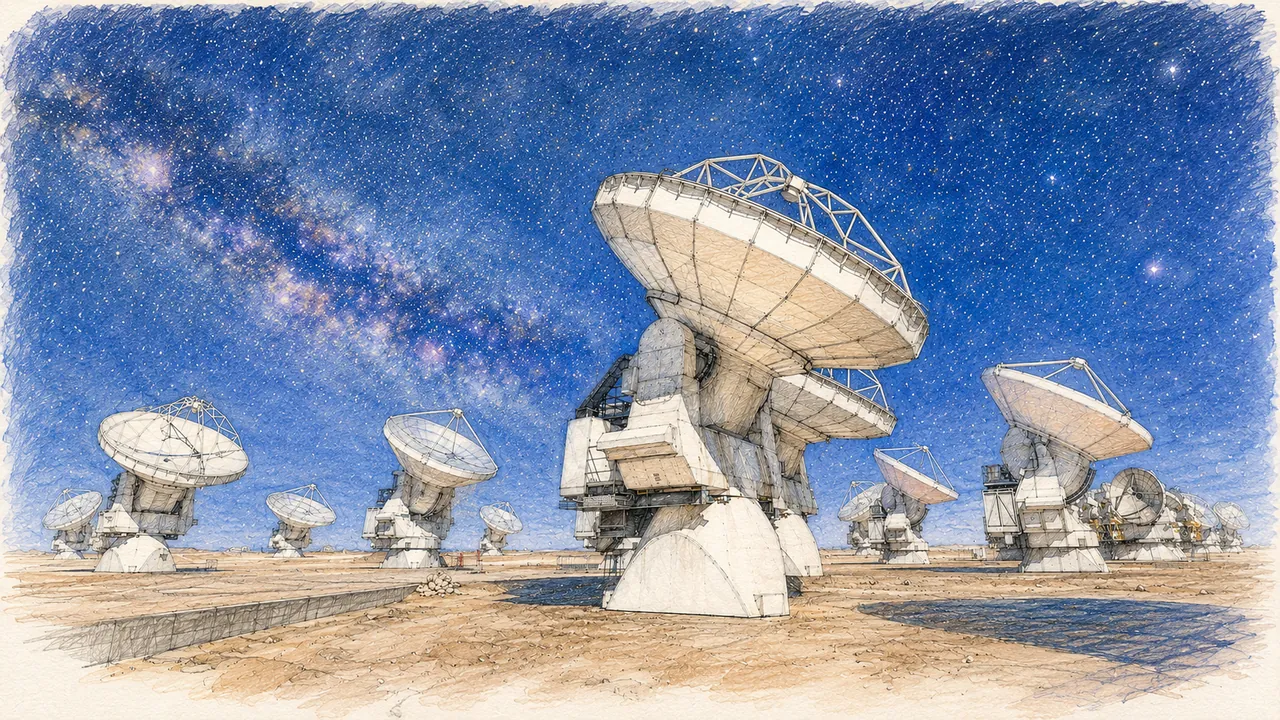
Interstellar comet 3I/ATLAS carries water that formed colder than our own comets’ — a first chemical reading of another planetary system
Using ALMA, astronomers constrained the ratio of “heavy” to ordinary hydrogen in the water of 3I/ATLAS — the third known interstellar object — and found it strongly deuterium-enriched: at least about 40 times Earth’s oceans and 30 times a typical Solar System comet. That points to water that formed under colder conditions than our own comets’. The result is a lower limit, derived indirectly (the water itself was never directly detected), and it says nothing about life or technology — only about chemistry and cold.
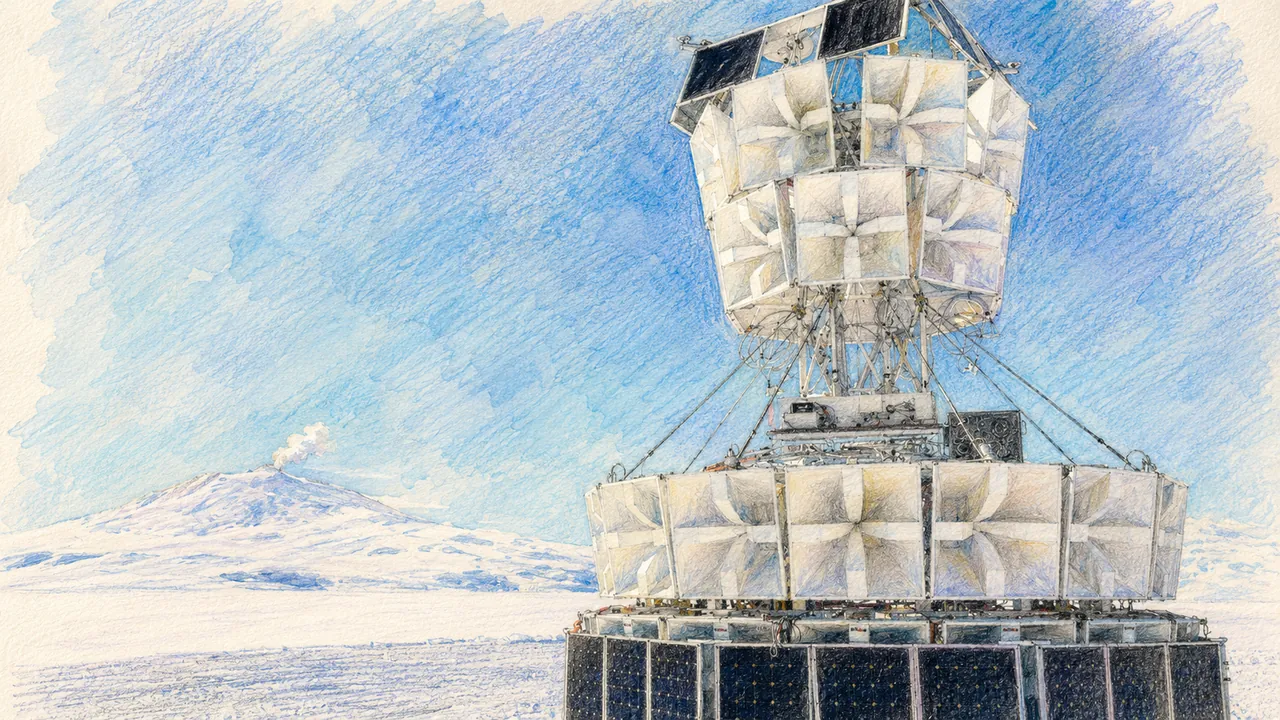
Two anomalous radio pulses over Antarctica remain unexplained — and the “new particle” explanation is losing support
Two unusual radio pulses recorded years ago by a balloon-borne Antarctic experiment still have no agreed explanation; a dedicated Pierre Auger search found no trace of the showers they would imply, making the exotic “new particle” reading far less likely while leaving the anomaly unsolved.