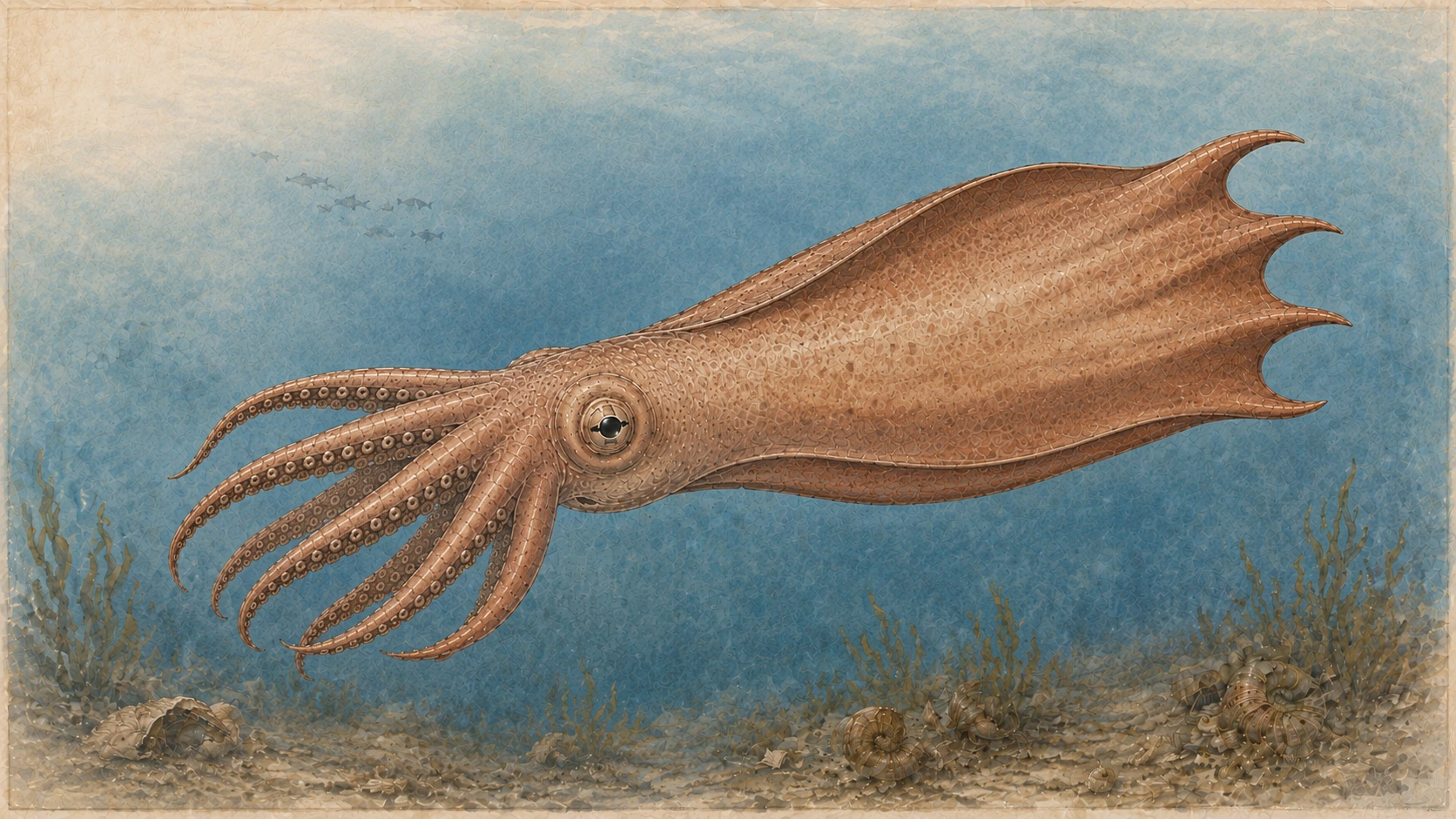
Ìtàn kraken, tí a yọ gbogbo àṣejù kúrò, tó sì kù sí fossil
Fossil jaw kì í ṣe ẹranko. Ó jẹ́ apá líle tó kù lára ara rírọ̀, fragment kan tí paleontologists gbọ́dọ̀ fi tún anatomy, ìhùwàsí àti ecology ṣe láìṣe bí ẹni pé wọ́n rí ẹranko náà nígbà tó wà láàyè. Ìdí nìyẹn tí ìwé ìwádìí yìí fi ń fa ènìyàn mọ́ra tó, tó sì rọrùn láti oversimplify. àkọlé tó ń fà mọ́ni ni: octopus ńlá bí kraken ni wọ́n ń ṣàkóso òkun Cretaceous. ẹ̀dà tó ṣọ́ra dára ju: fossil jaws tí preservation wọn dára gan-an ń daba pé díẹ̀ lára àwọn finned octopuses àkọ́kọ́ tí a mọ̀ jẹ́ carnivore ńlá, tí wọ́n máa ń fọ hard prey léraléra, tí wọ́n sì lè ti wà ní top tier ti Late Cretaceous marine food webs.
Èyí ṣì spectacular. Ṣùgbọ́n ó yẹ ká ka a gẹ́gẹ́ bí reconstruction láti jaw, wear àpẹẹrẹ, taxonomy àti body-size scaling — kì í ṣe sea-monster ìtàn.
Ohun tí àwọn olùkọ̀wé ṣe
Àwọn olùkọ̀wé tún ṣe àyẹ̀wò fossil jaws láti Cretaceous octobrachian cephalopods — ẹgbẹ́ tó gbooro tí octopus àti relatives rẹ̀ wà nínú rẹ̀. Jaws ńlá 15 ni a ti ròyìn tẹ́lẹ̀ láti Japan àti Vancouver Island. ẹgbẹ́ náà tún rí jaw míì 12 nínú carbonate concretions márùn-ún láti Japan pẹ̀lú digital fossil-mining.
Method náà darapọ̀ high-resolution, full-color grinding tomography pẹ̀lú zero-shot learning AI àwòṣe, ìyẹn àwòṣe tí a kò train specifically lórí fossils wọ̀nyí. Wọ́n grind concretion kọọkan ní 50-micrometer intervals, wọ́n sì photograph ojú tuntun kọọkan láti dá sequence color images ńlá. Segmentation àwòṣe tí a ń pè ní DEVA dá digital outline, tàbí mask, fún jaw nínú image kọọkan. Àwọn olùwádìí ṣàyẹ̀wò outline wọ̀nyí pẹ̀lú original images, lẹ́yìn náà wọ́n stack, wọ́n sì join wọn sí minimally smoothed, original-color 3D àwòṣe. Èyí jẹ́ kí wọ́n rí jaw tó farapamọ́ sínú àpáta, kí wọ́n sì ṣàyẹ̀wò chip, scratch àti wear àbùdá tó kékeré lórí ojú. Grinding tomography pa àpáta àpẹẹrẹ márùn-ún náà run, ṣùgbọ́n image dátà, masks àti 3D àwòṣe ni wọ́n archive.
Lẹ́yìn náà wọ́n ṣe ohun mẹ́rin tó so mọ́ ara wọn.
Àkọ́kọ́, wọ́n revise taxonomy. Fossil jaws tí a ti pin sí species márùn-ún ni wọ́n tún ṣètò sí species méjì: Nanaimoteuthis jeletzkyi àti Nanaimoteuthis haggarti. Genus náà, tí a ti ka sí relative vampire squid tẹ́lẹ̀, ni ìwé ìwádìí yìí fi sínú Cirrata, finned octopuses.
Ẹlẹ́ẹ̀kejì, wọ́n fa timeline náà sí ẹ̀yìn. Material tuntun náà mú N. jeletzkyi dé earliest Cenomanian, ní ayíká 100 million years ago, ó sì fa àkọsílẹ̀ tí a mọ̀ fún finned octopuses sí ẹ̀yìn ní tó 15 million years, àti octopuses ní gbogbogbo ní tó 5 million years.
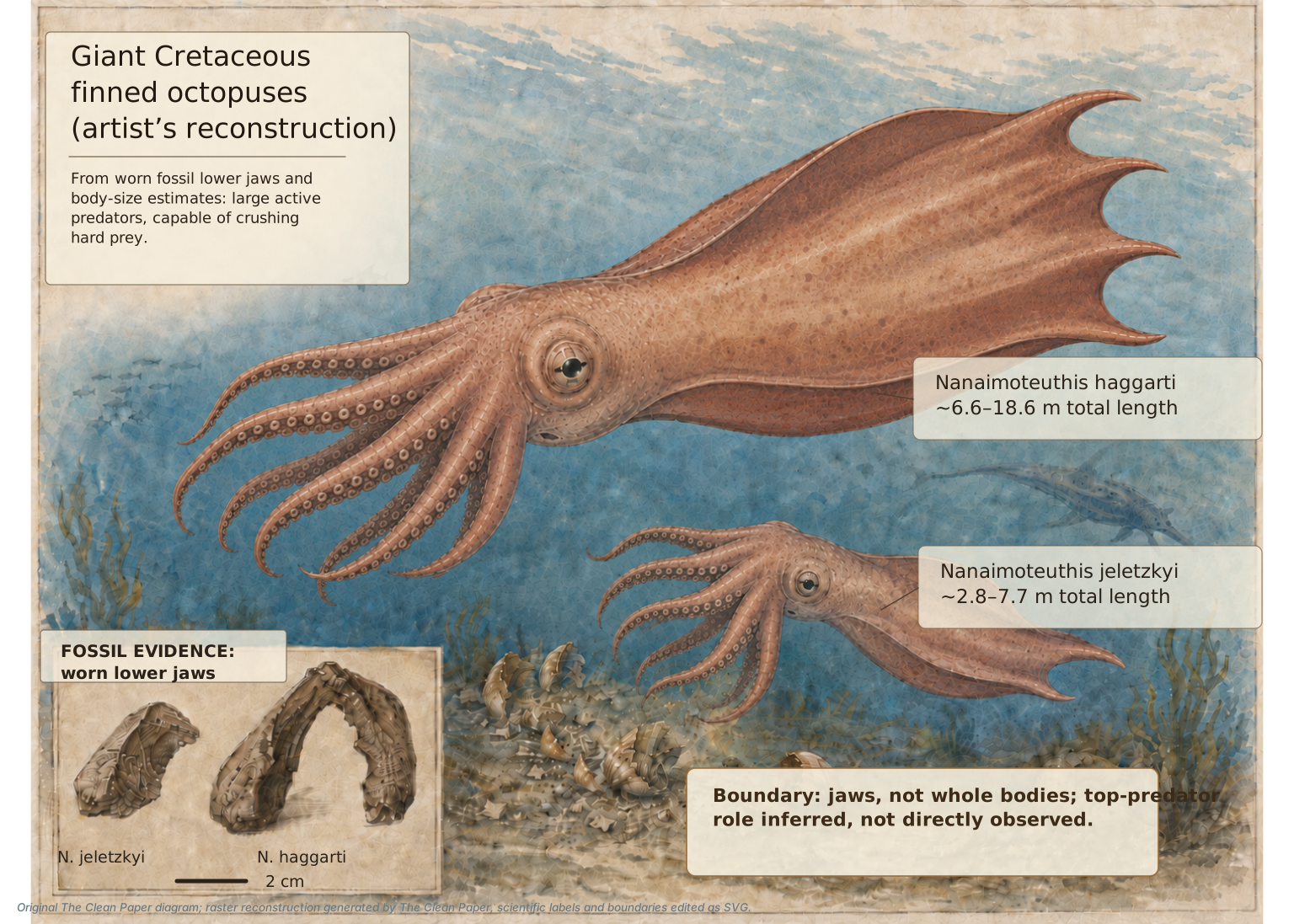
Ẹlẹ́ẹ̀kẹta, wọ́n ìṣírò àfojúsùn body ìwọ̀n láti jaw ìwọ̀n. Pẹ̀lú allometric relationships láti modern long-bodied finned octopuses, wọ́n ìṣírò àfojúsùn mantle length, lẹ́yìn náà total length. Estimate wọn gbooro: N. jeletzkyi lè dé tó 2.8 sí 7.7 meters total length, N. haggarti sì tó 6.6 sí 18.6 meters. Upper ààlà yìí ni ibi tí “kraken” èdè ti wá.
Supplementary ọ̀nà fi scaling chain náà hàn gbangba. Níbi tó yẹ, wọ́n reconstruct worn tàbí weathered jaw outline, lẹ́yìn náà wọ́n lo 12 species-specific relationships láàárín lower-jaw hood length àti mantle length. Wọ́n ṣe account fún average 39% fixation shrinkage nínú relevant modern specimens, wọ́n sì yí mantle length padà sí total length pẹ̀lú ratio 4.2 tí wọ́n rí láti long-bodied living finned octopuses. Yíyàn wọ̀nyí ń fún ààlà, kì í ṣe taara measurement ti fossil body.
Ẹlẹ́ẹ̀kẹrin, wọ́n ṣàyẹ̀wò wear. Àwọn jaw tó tóbi jù jẹ́ blunt àti rounded ní ibi tí juvenile máa ní sharper jaw elements. Wọ́n ní chips, scratches, polished ojú, cracks àti asymmetric loss ní jaw edges. Àwọn olùkọ̀wé túmọ̀ èyí gẹ́gẹ́ bí ẹ̀rí ti repeated hard-prey crushing, àti bóyá lateralized ìhùwàsí.
Ohun tí wọ́n rí
Ó ṣeé ṣe gan-an pé wọ́n jẹ́ early finned octopuses, kì í ṣe vampire squids. Supplementary taxonomy yà step méjì tó so mọ́ ara wọn. Bridge kọọkan jẹ́ strip jaw ohun èlò tó so hood mọ́ lateral wall. Nínú Nanaimoteuthis, bridge wọ̀nyí farapamọ́ patapata lábẹ́ inner àti outer jaw plates, àpẹẹrẹ kan tó ṣe àtìlẹ́yìn fún placement genus náà nínú Cirrata. Broad jaw wings rẹ̀ tún ṣe àtìlẹ́yìn fún assignment sí long-bodied ẹgbẹ́ ti finned octopuses. Èyí ṣe pàtàkì nítorí ìwé ìwádìí kì í kan sọ “large cephalopod”; ó ń yí ibi tí fossil wọ̀nyí wà nínú octopus history padà.
Wọ́n ti pẹ́ gan-an. New specimens náà fi finned octopuses sí ayíká 100 million years ago, ní Late Cretaceous. Èyí mú wọn jẹ́ díẹ̀ lára octopus-line animals àkọ́kọ́ tí a mọ̀.
Wọ́n lè ti tóbi gan-an. Body-size ìṣírò àfojúsùn kì í ṣe single measurement láti preserved body; wọ́n jẹ́ calculations láti jaws. Ṣùgbọ́n nọ́mbà náà ńlá paapaa nígbà tá a bá sọ ó pẹ̀lú ìṣọ́ra. Species kékeré, N. jeletzkyi, ni a ìṣírò àfojúsùn sí several meters total length. Species tó tóbi, N. haggarti, lè dé upper ìṣírò àfojúsùn tó 18.6 meters, tó jọ scale ti marine predators tó tóbi jù ní àkókò náà àti largest living cephalopods.
Jaws náà ní wear púpọ̀. Nínú specimens tó tóbi jù, jaw ohun èlò tó sọnù dé tó 10% ti total jaw length. ìwé ìwádìí jiyan pé wear yìí kì í ṣe preparation damage tàbí transport abrasion: specimens wá láti low-energy outer-shelf deposits, chips àti scratches preserved lọ́nà tó bá lò mu, co-occurring fossil squid jaws kò sì fi àpẹẹrẹ kan náà hàn. Àwọn olùkọ̀wé fi wear náà wé modern durophagous cephalopods — ẹranko tó ń jẹ hard prey.
Wear náà jẹ́ asymmetric. Right jaw edge ní wear púpọ̀ ju left lọ nínú species méjèèjì. Àwọn olùkọ̀wé túmọ̀ èyí sí ṣeé ṣe behavioral lateralization: preference láti lo side kan ju ekeji lọ. Nítorí lateralized ìhùwàsí ń ní association pẹ̀lú complex nervous ètò nínú modern animals, wọ́n daba pé octopuses àtijọ́ wọ̀nyí lè ti ní advanced intelligence.
Ohun tí èyí ṣeé túmọ̀ sí
Ecological interpretation tó lágbára jù ni pé finned octopuses ní Late Cretaceous kì í ṣe gbogbo wọn ni small abẹ́lẹ̀ animals nínú ecosystem tí large vertebrates ń dominate. Top-predator ọ̀ràn àwọn olùkọ̀wé darapọ̀ àwárí méjì: gigantic estimated body ìwọ̀n àti durophagous carnivory — repeated processing of hard animal prey — tí a infer láti jaw wear. Papọ̀, àwárí wọ̀nyí ṣe àtìlẹ́yìn fún possibility pé invertebrate lineage kan wọ top tier food web tí a sábà so mọ́ mosasaurs, plesiosaurs, large fish àti sharks.
Evolutionary ìtàn náà tún wuni. Vertebrate marine predators àti octopus-line cephalopods gba route tó yàtọ̀ sí ara wọn sí predation. Vertebrates ní jaws, streamlined bodies, wọ́n sì sábà dín external armor kù. Octopus relatives dín shell kù tàbí internalize rẹ̀, wọ́n di soft-bodied àti mobile, ṣùgbọ́n wọ́n pa powerful jaws àti flexible arms mọ́. ìwé ìwádìí náà frame èyí gẹ́gẹ́ bí convergent path sí large, intelligent marine predators.
Apá ìhùwàsí ni speculative jù. Extensive wear ṣe àtìlẹ́yìn fún hard-prey feeding. Large ìwọ̀n ṣe àtìlẹ́yìn fún ecological importance. Asymmetric wear ṣe àtìlẹ́yìn fún ṣeé ṣe lateralized ìhùwàsí. Ṣùgbọ́n “advanced intelligence” jẹ́ inference, kì í ṣe fossil measurement taara. Ó ṣeé gbà nínú context biology octopus, ṣùgbọ́n a kò gbọ́dọ̀ mú un lágbára ju ẹ̀rí lọ.
Ohun tí èyí kò fi ẹ̀rí múlẹ̀
- Kò preserve whole body ti giant octopus. Reconstruction dá lórí jaws ní pàtàkì, body ìwọ̀n sì jẹ́ inference láti modern finned-octopus scaling.
- Kò fi stomach contents tàbí taara prey remains hàn. Hard-prey feeding jẹ́ inference láti jaw wear, kì í ṣe fossilized meal.
- Authored research article náà kò propose pé wọ́n jẹ mosasaurs, plesiosaurs tàbí large marine reptiles míì. Research text rẹ̀ lo àwọn ẹranko wọ̀nyí gẹ́gẹ́ bí ìfiwéra ti body ìwọ̀n àti ecological position nìkan.
- Kò fún precise body length. Estimates jẹ́ ààlà, claim tó tóbi jù jẹ́ upper ìṣírò àfojúsùn.
- Kò measure intelligence taara. Lateralized jaw wear ni a túmọ̀ sí ṣeé ṣe behavioral lateralization, tó lè daba complex ìhùwàsí; ìyẹn ṣi ní inferential steps púpọ̀ kí a tó mọ ohun tí ẹranko lè ṣe.
- Kò túmọ̀ sí pé gbogbo early octopuses jẹ́ giant. Claim jẹ́ fún Nanaimoteuthis species wọ̀nyí, pàápàá N. haggarti, kì í ṣe gbogbo early octopus lineage.
Báwo ni ẹ̀rí ṣe lágbára tó?
Fún existence ti very large Cretaceous octopus-line jaws, ẹ̀rí lágbára: ìwé ìwádìí ní described specimens, digital àwòṣe, stratigraphic context àti ìfiwéra pẹ̀lú modern àti fossil cephalopod jaws.
Fún hard-prey feeding, ẹ̀rí tún reasonably lágbára. Wear àpẹẹrẹ detailed — chips, scratches, polish, cracks, asymmetric loss — àwọn olùkọ̀wé sì ṣe effort láti exclude preparation damage àti transport abrasion. ìfiwéra pẹ̀lú modern durophagous cephalopods jẹ́ bridge tó ṣeé gbà.
Fún exact body ìwọ̀n àti top-predator status, ìgbẹ́kẹ̀lé yẹ kí ó jẹ́ moderate. Size ìṣírò àfojúsùn dá lórí allometric scaling láti living long-bodied finned octopuses. Ecological role jẹ́ inference láti combination estimated ìwọ̀n àti durophagous carnivory, kì í ṣe taara observation. Argument náà coherent, ṣùgbọ́n ó jẹ́ ecological reconstruction, kì í ṣe taara census ti food web.
Kí nìdí tí ó fi ṣe pàtàkì?
ìwé ìwádìí yìí jẹ́ example tó dáa ti bí paleontology ṣe lè ṣe lágbára claims láti partial ẹ̀rí láìsí magic. Jaw ni object. Wear ni behavioral trace. Scaling curve ni bridge láti hard fossil sí soft body. Step kọọkan ń fi power kún un, step kọọkan sì ń fi uncertainty kún un. Lesson yẹn ni ó yẹ ká pa mọ́.
Ó tún correct familiar picture. A sábà foju inú Cretaceous oceans gẹ́gẹ́ bí ayé large vertebrate predators àti smaller shelled prey. Fossils wọ̀nyí ń daba pé díẹ̀ lára soft-bodied invertebrates kò kan ń farapamọ́ ní abẹ́ food web náà. Ó ṣeé ṣe kí wọ́n máa compete ní upper ìpele rẹ̀.
èsì náà visual gan-an, ṣùgbọ́n clean ìtàn kì í ṣe “kraken jẹ́ gidi.” Ó jẹ́ pé large, early finned octopuses fi jaws sílẹ̀, láti inú wọn ni àwọn olùwádìí ṣe reconstruct gigantic bodies àti repeated hard-prey feeding — combination tó ń fún serious, ṣùgbọ́n inferential, ọ̀ràn pé invertebrate top predators wà ní age of marine reptiles.
Àkótán kedere
Àwọn olùwádìí tún ṣàyẹ̀wò Cretaceous fossil cephalopod jaws láti Japan àti Vancouver Island, wọ́n sì lo full-color grinding tomography pẹ̀lú zero-shot AI segmentation láti digitally reconstruct hidden jaws gẹ́gẹ́ bí detailed 3D specimens láti Japanese àpáta. Wọ́n tún organize fossil taxa sí species Nanaimoteuthis méjì, tí wọ́n túmọ̀ sí early finned octopuses. Fossils náà fa àkọsílẹ̀ finned octopuses sí tó 100 million years ago. Láti jaw-size scaling, àwọn olùkọ̀wé ìṣírò àfojúsùn total lengths tó 2.8–7.7 m fún N. jeletzkyi àti 6.6–18.6 m fún N. haggarti. Heavy jaw wear — chips, scratches, polish, cracks àti asymmetric edge loss — ń daba repeated hard-prey crushing àti bóyá lateralized ìhùwàsí. Gigantic estimated ìwọ̀n pẹ̀lú durophagous carnivory ṣe àtìlẹ́yìn fún interpretation pé octopuses wọ̀nyí lè ti wà ní top tier marine food webs. ẹ̀rí kò ní whole bodies, exact lengths, identified prey tàbí taara measurements of intelligence. Authored research article kò propose predation lórí large marine reptiles.
Àyẹ̀wò láìsí àṣejù
Ohun tí ìwé ìwádìí fi hàn: Large Cretaceous octopus-line jaws, tí a revise sí Nanaimoteuthis species méjì, tí a sì fi sínú finned octopuses; àkọsílẹ̀ Cirrata tó ti pẹ́ sí i; body-size ìṣírò àfojúsùn tó dé several meters, bóyá dé 18.6 m; extensive adult jaw wear tó bá hard-prey feeding mu; asymmetric wear tó bá ṣeé ṣe lateralized ìhùwàsí mu.
Ohun tó ṣeé gbà ṣùgbọ́n tí a kò fi ẹ̀rí múlẹ̀: Pé N. haggarti jẹ́ ọ̀kan lára invertebrates tó tóbi jù lọ tí a ti mọ̀; pé àwọn ẹranko yìí jẹ́ true top predators; pé asymmetric wear ń fi behavioral lateralization àti advanced cognition hàn.
Ohun tí kò fi hàn: Whole-body fossils; taara prey tàbí stomach contents; exact body lengths; predation lórí large marine reptiles; ẹ̀rí taara of intelligence; pé gbogbo early octopuses jẹ́ giants.
Main limitations: Body ìwọ̀n jẹ́ inference pẹ̀lú multi-step jaw-to-mantle-to-total-length scaling àwòṣe; top-predator status jẹ́ inference láti estimated ìwọ̀n + durophagous carnivory; ìhùwàsí jẹ́ inference láti asymmetric wear; fossils preserve jaws, kì í ṣe whole animals tàbí taara prey.
Confidence wo ni gbogbogbò reader yẹ kí ó ní? Gíga pé fossils wọ̀nyí ní very large early finned-octopus jaws pẹ̀lú lágbára wear ẹ̀rí. Medium pé largest animals dé upper end 6.6–18.6 m ìṣírò àfojúsùn. Medium pé wọ́n jẹ́ true top predators dípò large hard-prey carnivores nìkan. Kéré pé a lè sọ ohun kan specific nípa intelligence wọn. Ìpò tó yẹ: fossil ìtàn tó spectacular, ṣùgbọ́n tí a kọ láti jaws àti inference, kì í ṣe complete sea monster.
Àwọn àtúnṣe lẹ́yìn ìtẹ̀jáde
Àwọn orísun
Da lórí: Earliest octopuses were giant top predators in Cretaceous oceans — Shin Ikegami, Jörg Mutterlose, Kanta Sugiura, Yusuke Takeda, Mehmet Oguz Derin, Aya Kubota, Kazuki Tainaka, Takahiro Harada, Harufumi Nishida, and Yasuhiro Iba, Science 392, 406–410 (2026).
- Àpilẹ̀kọ ìmọ̀ sáyẹ́ǹsì — Science 392, 406–410 (2026)
- Orísun — Supplementary methods, text, figures S1–S6, and references
- Orísun — Supplementary tables S1–S6
- Orísun — MDAR reproducibility checklist
- Àkójọpọ̀ dátà — Fossil lower jaws dataset — Figshare
- Àkójọpọ̀ dátà — Tomographic animations — Figshare
- Kóòdù — CPU-enabled AI segmentation code — Zenodo
Ẹni tó kọ ọ́
Laura Nesso · àwọn àwòrán àti ìjápọ̀ láti ọwọ́
Laura Nesso, Nova Vela · olóòtú
Michele Renda
· àwọn àwòrán àti ìjápọ̀ láti ọwọ́
Laura Nesso, Nova Vela · olóòtú
Michele Renda · olùtumọ̀
Nova Vela
· olùtumọ̀
Nova Vela
The Clean Paper · 25 Oṣù Kẹfà 2026 · Ọ̀rọ̀ inú ojúlé yìí wà lábẹ́ ìwé-àṣẹ CC BY-SA 4.0. Àwọn àwòrán ní ìwé-àṣẹ ọ̀tọ̀ọ̀tọ̀. 


Àkíyèsí olóòtú
AI ni ó kọ àpilẹ̀kọ yìí, ẹgbẹ́ olóòtú sì ṣàyẹ̀wò rẹ̀. Ó jẹ́ àlàyé tó ṣe kedere, tó sì ṣọ́ra nípa iṣẹ́ tí a so mọ́ ọn; kì í ṣe arọ́pò fún kíka iṣẹ́ náà. Olóòtú ni ó ṣì ní ojúṣe fún yíyan, ìtumọ̀ àti ọ̀rọ̀ ìkẹyìn.