A challenge trial is a useful shortcut, not the finish line
Norovirus is the virus people usually meet as a sudden, miserable stomach illness: vomiting, diarrhea, cramps, and a few days of acute disruption. It spreads easily in places where people share air, surfaces, bathrooms, food, and care — schools, nursing homes, hospitals, military bases, child-care centers. There is still no licensed norovirus vaccine.
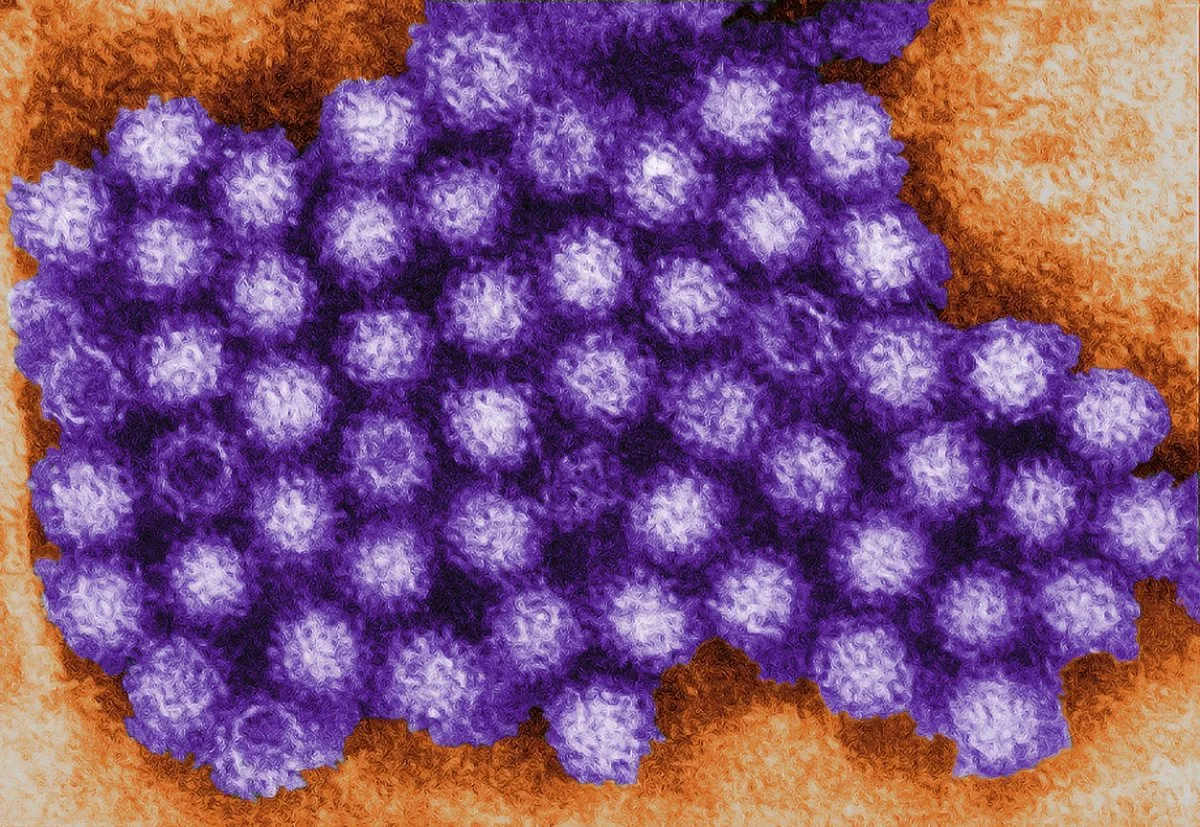
That makes this study genuinely interesting. The authors tested an oral tablet vaccine, VXA-G1.1-NN, in a randomized, placebo-controlled human challenge trial. Adults were vaccinated, then deliberately exposed to GI.1 norovirus. The vaccine reduced qPCR-detectable infection, produced systemic and mucosal immune responses, and reduced viral RNA in stool and vomit at some time points.
In a human challenge trial, the exposure is not accidental. Healthy volunteers are vaccinated or given placebo, then intentionally given a measured dose of the pathogen in a controlled setting. That design can reveal a signal quickly, but it is not the same as watching a vaccine work in ordinary outbreaks.
But this is not the headline “a norovirus vaccine is here.” It is a narrower, more useful result: in a controlled phase 2b challenge model, an oral vaccine candidate showed a significant infection signal and possible correlates of protection, while missing the prespecified clinical gastroenteritis endpoint. It did not prove real-world protection; the vaccine group had fewer cases of clinical norovirus gastroenteritis, but the difference was too uncertain to count as a clear clinical result. The study also did not test the genotypes that have dominated recent decades.
The difference matters. A challenge study can reveal signal faster than a field trial. It can help developers learn which immune markers track protection. It cannot substitute for the harder evidence needed before a vaccine is licensed and used at population scale.
What they found
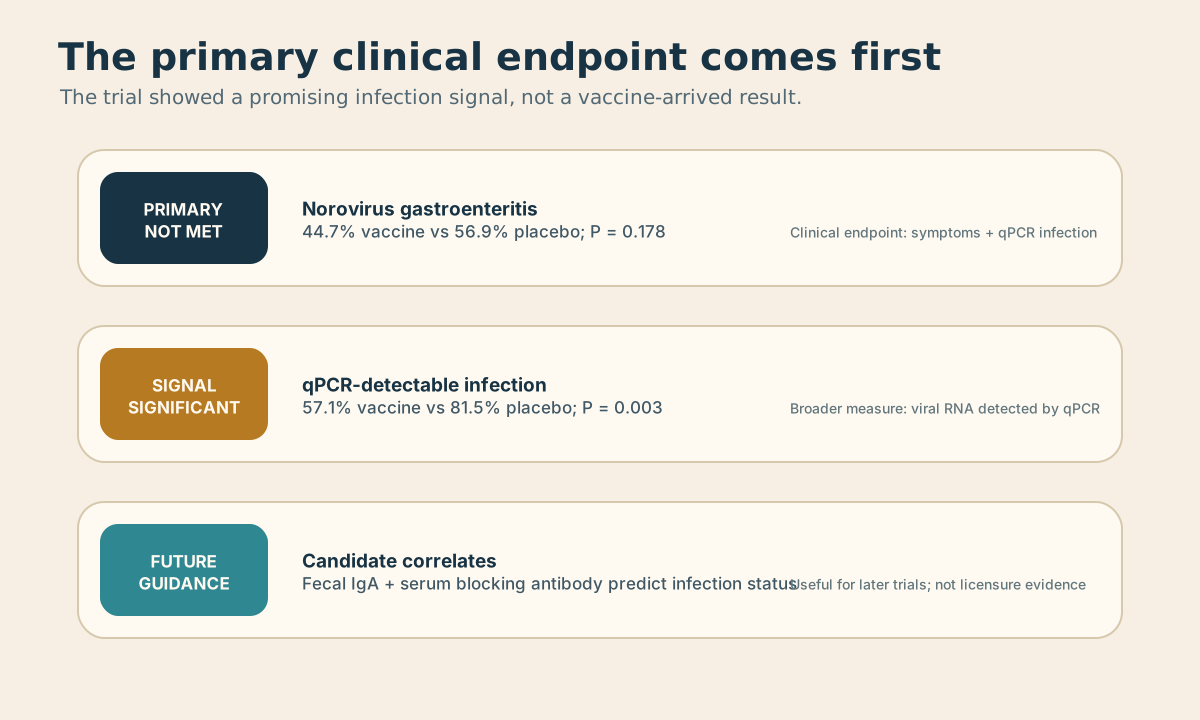
The prespecified clinical endpoint was not met. Norovirus gastroenteritis occurred in 44.7% of the vaccine group and 56.9% of the placebo group. That is a 12.2 percentage-point difference and a 21% relative reduction, but the confidence interval crossed zero (95% CI -4.24 to 28.61) and the result was not statistically significant (P = 0.178). For planning, the authors had modeled a much larger clinical separation: about 40% gastroenteritis in placebo versus 12% in vaccine recipients. The observed result went in the expected direction, but it was not close to that planning assumption.
The stronger efficacy signal was on infection measured by qPCR, a broader and more permissive measure than clinical gastroenteritis. After challenge, 57.1% of vaccinated participants had qPCR-detectable norovirus infection, compared with 81.5% of placebo participants. The difference was 23.6 percentage points (95% CI 7.4 to 38.0, P = 0.003), a 30% relative reduction.
That hierarchy is central. The vaccine reduced detectable infection in this challenge model. The vaccine group also had fewer cases of clinical norovirus gastroenteritis, but the difference was too uncertain to count as a clear result. In statistical terms, the trial missed its primary clinical endpoint. A reader should keep both facts in view at once.
The safety readout was reassuring but bounded. The authors report no vaccine-related serious adverse events or dose-limiting toxicities. Most solicited adverse events after vaccination were mild, with no severe solicited events reported in the first week. The right wording is that the vaccine was well tolerated in this trial, not that rare safety questions are settled.
The immune response was broad. By day 28, compared with placebo, the vaccine group had higher serum VP1-specific IgA, serum IgG, and functional blocking antibody titers. It also increased VP1-specific IgA in fecal samples, nasal lining fluid, and saliva. In blood, it stimulated antibody-secreting cells and mucosal-homing plasmablasts — the sort of response an oral mucosal vaccine is meant to provoke.
The shedding result is also useful, but easy to overstate. Viral RNA levels were lower in emesis on challenge day 2 and lower in stool on challenge days 4 and 8. The proportion of people who were qPCR-positive without acute-gastroenteritis symptoms was 13.1% in the vaccine group versus 24.6% in placebo, but that comparison did not reach conventional statistical significance (P = 0.087). qPCR detects viral RNA; it is not the same as directly measuring infectious virus.
Why the immune markers matter
Norovirus vaccine development has a practical problem: large field trials are hard. Outbreaks are short, unpredictable, and clustered. If developers do not know which immune responses predict protection, it is difficult to decide which candidates deserve the expense and scale of later trials.
That is why the correlates-of-protection part of the paper matters. The authors trained models using immune data from vaccinated participants before challenge. In those models, two features stood out: serum blocking antibody and fecal IgA. Serum blocking antibody measures how well antibodies block the virus from binding in the assay; fecal IgA is an antibody signal measured in stool, closer to the gut surface where norovirus acts.
The Lasso model predicted infection status with an area under the curve of 0.76; the random forest model had an AUC of 0.73. AUC is a model-performance score: 0.5 would be no better than chance, 1.0 would be perfect separation. Scores around 0.73 to 0.76 are useful but not decisive. They mean the immune markers helped distinguish infected from noninfected participants in this study; they do not create a diagnostic test, and they do not turn the trial into licensure evidence.
They do suggest that a combination of functional serum antibody and local gut IgA may help predict who is protected after this vaccine.
That fits the biological story. Norovirus infects mucosal surfaces. A vaccine given by mouth is trying to generate protection at the barrier where the virus enters and replicates, not just in the bloodstream. The paper’s strongest mechanistic message is not “tablet vaccine solves norovirus.” It is: mucosal immunity, especially fecal IgA alongside functional blocking antibody, looks important enough to guide the next round of vaccine development.
What this does not prove
- It does not show that a norovirus vaccine is approved or available. This is a phase 2b challenge study.
- It does not prove protection in the real world. The study used a controlled challenge, not natural exposure in schools, nursing homes, hospitals, cruise ships, or households.
- It does not prove protection against all noroviruses. This challenge used GI.1; GII.4 has been more prevalent over the past two decades.
- It does not turn the lower gastroenteritis rate into a clear clinical result. The qPCR infection signal was significant; the prespecified clinical gastroenteritis endpoint was not.
- It does not prove that shedding reduction blocks transmission. The trial measured viral RNA in samples, not person-to-person spread.
- It does not settle rare safety questions. It found no serious vaccine-related signal in this trial, but it was not a large safety database.
- It does not erase the conflict-of-interest context. The study was funded by Vaxart, and several authors were Vaxart employees, shareholders, consultants, or patent holders.
None of those points cancels the result. They define its size.
The challenge-model caveat
The authors are explicit about one major limitation: challenge studies use a dose designed to make enough people infected for the analysis to work. In this paper, they write that controlled challenge studies routinely use an infectious dose three to five orders of magnitude higher than typical natural exposure. The inoculum is the initial dose of virus given to participants; here it was a measured oral dose of live GI.1 Norwalk virus.
That cuts both ways.
On one hand, the model is powerful. It lets researchers test a vaccine in a controlled way, with known timing, known genotype, intensive sampling, and immune measurements around the challenge. That is why the study can say so much about infection, shedding, and correlates.
On the other hand, the model is artificial. A very high challenge dose may overwhelm some immune defenses or change the relationship between infection and symptoms. In this study, the placebo attack rate for qPCR infection was high — about 82% — while the gastroenteritis attack rate was lower, about 57%. Attack rate here means the share of participants in that group who had the outcome. The authors say that the lower clinical-disease attack rate may have reduced power to detect clinical disease differences. They also note that it is unclear whether intestinal symptoms in the challenge study were triggered by active viral replication, by the large inoculum, or by both.
So the most careful reading is not “the vaccine only works this much” or “the vaccine would work better outside the challenge.” It is: the challenge model is a deliberately harsh, informative test, and its results still need field confirmation.
Why it matters
The obvious public version of this story is tempting: a pill vaccine reduced norovirus infection, so the stomach-bug vaccine is almost here. That is too fast.
The more useful story is that norovirus vaccine development may finally have a clearer path. This candidate showed a real infection signal in a human challenge study, stimulated mucosal immune responses, and pointed to immune markers that could help future trials. That is progress.
It is also still early. The world does not need a vaccine that works only in a single GI.1 challenge model in healthy young adults. It needs evidence that a vaccine can protect the people and places where norovirus does the most damage: older adults, children, care facilities, hospitals, and mixed real-world outbreaks driven by changing genotypes.
This paper helps bridge that gap. It does not close it.
Clean summary
A phase 2b randomized, placebo-controlled human challenge study tested the oral tablet norovirus vaccine candidate VXA-G1.1-NN in healthy adults. After GI.1 norovirus challenge, the prespecified clinical gastroenteritis endpoint was 44.7% in vaccinated participants versus 56.9% in placebo participants, a 21% relative reduction that was not statistically significant. qPCR-detectable infection, a broader measure, occurred in 57.1% versus 81.5%, a significant 30% relative reduction. The vaccine was well tolerated in this trial, generated serum and mucosal antibody responses, reduced viral RNA shedding at selected time points, and identified serum blocking antibody plus fecal IgA as candidate correlates of protection. The result is promising, but it is not a licensed vaccine, not phase 3 real-world evidence, not proof of reduced transmission, and not proof against all norovirus genotypes.
No-BS check
What the paper shows: In a controlled GI.1 norovirus challenge study, an oral tablet vaccine candidate missed the prespecified clinical gastroenteritis endpoint but reduced qPCR-detectable infection, produced mucosal immune responses, showed no serious vaccine-related safety signal, and reduced viral RNA in stool or emesis at some time points.
What is plausible but not proven: That this vaccine platform could reduce transmission by lowering shedding; that fecal IgA and serum blocking antibody can guide later vaccine development; that a related bivalent vaccine might work against more relevant genotypes.
What it does not show: That a norovirus vaccine is approved or ready; that real-world outbreaks will be prevented; that GII.4 disease is covered; that clinical gastroenteritis was significantly reduced; that person-to-person transmission was measured; that rare safety questions are settled.
Main limitations: Healthy adult challenge population; single GI.1 challenge strain; high artificial inoculum; prespecified clinical gastroenteritis endpoint not met; qPCR RNA is not the same as infectious virus; company-funded trial with substantial author conflicts; no phase 3 field efficacy.
How much confidence should a general reader have? High that this oral vaccine candidate generated the intended mucosal immune response and reduced qPCR infection in this challenge model. Moderate that it may reduce shedding and help future development. Low for any claim that a norovirus vaccine is now available, broadly protective, or proven to stop real-world transmission.
Sources
Based on: An oral norovirus vaccine generates mucosal immunity and reduces viral shedding in a phase 2 placebo-controlled challenge study — Becca A. Flitter, Joshua Gillard, Susan N. Greco, Maria D. Apkarian, Nick P. D'Amato, Lam Quynh Nguyen, Elena D. Neuhaus, Darreann Carmela M. Hailey, Marcela F. Pasetti, Mallory Shriver, Christina Quigley, Robert W. Frenck Jr., Lisa C. Lindesmith, Ralph S. Baric, Lee-Jen Wei, Sean N. Tucker & James F. Cummings, Science Translational Medicine (2025).
- Paper — Flitter et al., Science Translational Medicine (2025)
- Source — ClinicalTrials.gov, NCT05212168
- Code — Zenodo analysis code record, DOI 10.5281/zenodo.15178451
This draft is based on the peer-reviewed Science Translational Medicine full text and the registered clinical trial record. The trial was funded by Vaxart; several authors are Vaxart employees, shareholders, consultants, or patent holders. That conflict is part of how the evidence should be read, not by itself a reason to dismiss the result.
Written by
Cinzia Vaglio · figures and links by
Laura Nesso · edited by
Michele Renda
· figures and links by
Laura Nesso · edited by
Michele Renda
Editorial note
This article was prepared with AI assistance and human editorial review. It is a clear, conservative explanation of the linked work, not a substitute for reading it. Responsibility for selection, interpretation, and final wording rests with the editor.